Key Takeaways
- Traveling welders earn more than stationary shop welders because compensation includes base pay plus per diem, overtime, and travel allowances that can add $10,000–$30,000 or more annually to a base wage.
- Per diem rig welders average $96,884 per year in current data, with the 75th percentile at $100,000 and top earners reaching $166,500.
- $100,000 a year welding is genuinely achievable for traveling welders — it’s closer to the median for working pipeline and rig welders than a ceiling most can’t reach.
- The highest-paid traveling welding jobs are offshore and underwater welding, followed by pipeline and industrial shutdown work.
- There’s no solid evidence that welding itself shortens life expectancy — long-term health risks trace to inadequate fume and UV protection, not the trade itself.
What Is a Traveling Welder?
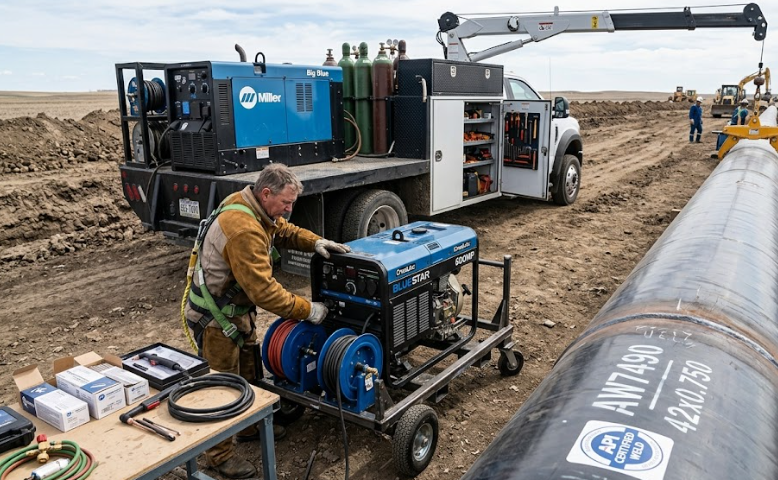
A traveling welder is a skilled tradesperson who takes contract or project-based work across multiple locations rather than working a fixed-site shop position — following pipeline projects, industrial shutdowns, shipyard contracts, or offshore assignments from one job to the next. Compensation for traveling welders typically includes a base hourly wage, per diem (a daily allowance for meals and lodging), overtime pay on longer project shifts, and sometimes travel reimbursement or hotel accommodations covered directly by the employer. Per diem in particular is one of the most significant income components that doesn’t always show up in published hourly rate comparisons, but is often the difference between a good year and an exceptional one.
Do Travel Welders Make a Lot of Money?
Yes — consistently more than comparable stationary shop positions. The income advantage of traveling work comes from several compounding factors:
Per diem is largely tax-advantaged income. Daily allowances covering meals and lodging are generally not taxed as income up to IRS-established rates, meaning a welder earning $29/hour plus $120/day per diem is effectively earning significantly more after-tax value than an hourly comparison alone suggests.
Overtime is the norm, not the exception. Many traveling welder contracts run 60+ hours per week, particularly on industrial shutdowns and pipeline projects with hard completion deadlines. Time-and-a-half on a $30/hour base rate at 60 hours per week accumulates quickly.
Remote and hazardous premiums stack on top. Work in Alaska, offshore platforms, or high-hazard environments typically adds explicit premium pay on top of the base rate and per diem — not just harder conditions for the same money.
Current market data reflects this: per diem rig welder average annual pay sits at $96,884, with most falling between $72,500 and $100,000 annually, and top earners at the 90th percentile reaching $166,500. On individual contracts, pipe welder positions at shipyards advertise $50/hour plus $140/day per diem, and structural TIG positions run $38/hour plus $135/day per diem on current job boards.
What’s the Highest Paid Traveling Welding Job?
Underwater/Commercial Dive Welding
Offshore oil and gas work — particularly in the Gulf of Mexico — produces the highest per-hour and per-day rates available in any welding specialty. Experienced offshore underwater welders consistently earn over $100,000 per year, with Alaska hazard work paying expert divers $120,000–$150,000 for half a year of work.
Pipeline Welding
The backbone of traveling welder income for most of the trade. Pipeliners Local 798 journeymen earn $52.07–$53.00 per hour base wage plus $165 per day per diem — stacked together over a full-employment year, this reliably puts working pipeline welders at or near six figures before top-end outliers are considered.
Industrial Shutdown Welding
Power plants, refineries, and chemical facilities require periodic scheduled maintenance shutdowns — often the only window for repair and upgrade welding. These projects typically run on compressed timelines with 60+ hour weeks, hazard pay for confined space or chemical exposure, and premium urgency rates. Skilled shutdown welders who maintain a reliable reputation across contractors are among the most consistently employed and well-compensated traveling welders outside of pure pipeline work.
Offshore Rig Welding
Rig welders average around $77,000 in annual data but commonly exceed this figure when overtime and offshore premiums are included in actual worked periods. The 12-hour day and rotating schedule norm on offshore rigs concentrates significant income into project periods.
What Does a Traveling Welder’s Annual Income Actually Look Like?
The gap between published hourly rates and actual annual income for traveling welders is where most people underestimate the career’s earning potential. A realistic breakdown for a working pipeline welder:
Base hourly rate: $46–$53/hour
Hours per week on project: 60–70
Per diem: $120–$165/day
Weeks of paid work per year: 40–48 (depends on finding consecutive contracts)
At $50/hour × 60 hours/week × 44 weeks, plus $140/day per diem for 300 days, the math produces well over $130,000 in gross compensation — before counting any hazard premiums or particularly high-rate weeks. This is why the data showing 75th percentile per diem rig welders at $100,000 likely understates what active, consistently-employed traveling welders earn when their full compensation package is counted.
Can a Welder Make $100,000 a Year?
Yes — and for traveling welders specifically, it’s the median outcome for the most common specialty (pipeline/rig) rather than an exceptional ceiling. The specific paths:
Pipeline welding with 6G certification — with travel and per diem stacked, six figures is the median for working pipeline welders, not the ceiling, according to industry data.
Per diem rig welding — average annual pay of $96,884 with the 75th percentile at $100,000 means half of welders in this category are at or above this threshold.
Industrial shutdown contracts — the combination of urgency premiums, overtime, and hazard pay on compressed-timeline shutdown projects can produce strong annual income for welders who string several contracts together across a year.
Union membership — adding 25–40% to base wage puts union traveling welders meaningfully above their non-union counterparts in most markets.
Can You Make $300,000 as a Welder?
This is possible but genuinely rare, and the figures that produce this level require an unusual combination of factors that most traveling welders never reach simultaneously. The welders who approach or reach this level typically combine:
Elite underwater welding credentials with saturation diving qualifications for the deepest, highest-premium offshore work, extensive offshore experience commanding day rates in the $600–$1,200+ range on complex installations, consistent full-year employment across multiple high-paying contracts without significant gaps, and often supervisory or crew leadership responsibilities layered on top of hands-on welding work.
It’s a ceiling for a small number of highly specialized welders with the right combination of credentials, experience, and willingness to take on the hazard that comes with the pay — not a typical working outcome from traveling welding alone.
How to Maximize Traveling Welder Income: Step-by-Step
- Get 6G pipe certification first. This is the single credential that unlocks the highest-paying pipeline work for most traveling welders.
- Build a reliable contractor reputation across multiple companies. Traveling welders who are known to show up, pass weld tests, and finish projects get called for the next one — this continuity is what fills a calendar.
- Understand your per diem math before accepting contracts. A contract offering lower hourly rate with higher per diem can net more after-tax than a higher hourly rate with minimal daily allowance.
- Follow the work geographically. The Permian Basin, Gulf Coast, Alaska, and major industrial corridors aren’t optional geography for the highest-paying work — staying close to home limits access to the market that pays most.
- Stack certifications to access premium specialty work. ASME, API, and process-specific qualifications open shutdown and specialty contracts that entry-level pipeline work doesn’t access.
Why Do Welders Not Live Long?
There’s no solid evidence that welding itself shortens life expectancy. Long-term risks in the trade — elevated risks from fume exposure and UV radiation — trace directly to inadequate protective equipment use, not the work itself. The additional physical demands of traveling welding work, particularly outdoor pipeline and offshore environments, do accumulate on the body over decades, which is why experienced traveling welders often plan a career arc toward inspection, supervision, or contracting before physical demands force the issue. But this is a career planning consideration, not evidence that the trade inherently shortens life.
Common Mistakes Traveling Welders Make With Their Income
- Ignoring per diem’s tax advantage when comparing contracts — two contracts at the same base hourly rate can have meaningfully different after-tax values depending on the per diem structure.
- Treating gaps between contracts as unavoidable — the welders who maximize annual income actively build relationships with multiple contractors so one contract’s end is quickly followed by the next.
- Staying regional when the highest-paying work is geographic — the income ceiling for traveling welders who don’t actually travel is closer to shop pay than pipeline pay.
- Skipping 6G certification because current work doesn’t require it — this single credential change opens the pipeline market where per diem compensation is highest.
- Underestimating overtime accumulation in annual planning — 60-hour weeks on a 44-week project calendar compound the base rate calculation dramatically.
Wrapping Up
Traveling welder income is substantially higher than published hourly rates alone suggest — per diem, overtime, and hazard premiums are what convert a competitive base wage into six-figure annual compensation for welders who follow the work consistently. Six-figure income isn’t exceptional in this category; for pipeline and rig welders with the right certification and willingness to travel, it’s the median for actively employed workers, not a ceiling that only a few reach.
Frequently Asked Questions
Can a welder make $100,000 a year?
Yes — for traveling welders in pipeline and per diem rig roles specifically, current data puts the average annual pay at $96,884 with the 75th percentile at $100,000, making six figures a median outcome for consistently employed travelers rather than an outlier ceiling.
What’s the highest paid traveling welding job?
Offshore underwater welding tops the list, followed by pipeline welding (particularly with 6G certification and Pipeliners Local 798 rates), industrial shutdown work with urgency and hazard premiums, and offshore rig welding with overtime stacked on top.
Can you make $300,000 as a welder?
Yes but it’s genuinely rare, typically requiring elite underwater welding credentials, extensive offshore day-rate experience at $600–$1,200+ per day, consistent full-year employment, and often supervisory responsibilities on top of hands-on work.
Do travel welders make a lot of money?
Yes — traveling welders consistently out-earn comparable stationary shop positions because total compensation includes base pay plus per diem (partially tax-advantaged), overtime on longer project shifts, and hazard or remote premiums that don’t apply to shop work.
Why do welders not live long?
There’s no solid evidence welding shortens life expectancy. Long-term risks come from inadequate fume and UV protection use, not the trade itself — welders who consistently use proper PPE largely avoid the health outcomes this persistent myth describes.