Introduction to Welding Fundamentals
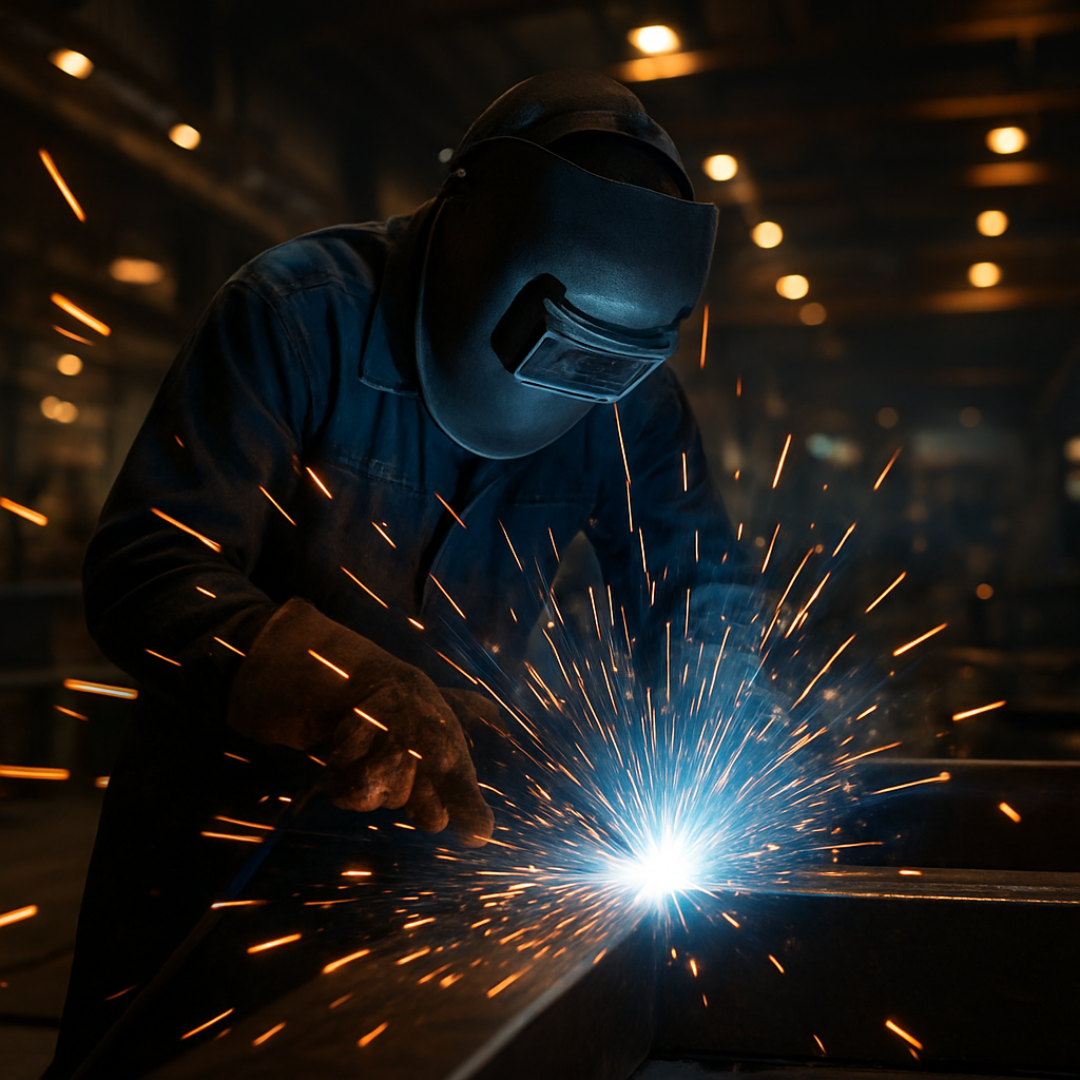
Welding fundamentals cover the core principles of joining metals through fusion processes. These principles include understanding arc welding techniques, choosing the right equipment, following strict safety practices, and developing the hands-on skills needed to create strong, durable joints. At its most basic level, welding uses intense heat—often around 6,500°F—to melt base metals at their connection points. Once molten, the metals mix directly or with filler material to form a metallurgical bond that can rival the strength of the original material.
For anyone exploring welding as a career, overseeing industrial projects, or simply wanting to understand how metal structures are made, these fundamentals are essential. Welding plays a critical role in modern manufacturing, infrastructure, and product development, making it a valuable skill across countless industries.
Why Welding is Essential
Welding is one of the most important processes in modern construction and manufacturing. It supports everything from transportation systems and buildings to energy infrastructure and medical equipment. Because of this wide reach, welding impacts everyday life more than most people realize.
Beyond its practical importance, welding also offers strong career potential. Skilled welders work in diverse environments, solve real-world problems, and often enjoy stable employment. Understanding welding fundamentals is the first step toward accessing these opportunities.

The Science Behind Welding
At its core, welding is a fusion process that joins metals at a molecular level. Unlike mechanical joining methods such as bolting or riveting, welding integrates metals into a single, unified structure, creating joints with exceptional strength and durability.
The process begins by identifying the parent materials and applying intense heat to the weld joint. When temperatures reach approximately 6,500°F in arc welding, the base metals melt to form a weld pool, where the materials intermix. Filler metal is often added to strengthen the final joint. The selection of filler metal must meet both chemical and mechanical requirements to ensure a durable weld.
Core Arc Welding Processes
Arc welding uses an electric arc to generate the heat necessary for metal fusion. Key arc welding methods include:
- Shielded Metal Arc Welding (SMAW/Stick Welding)
- Gas Metal Arc Welding (GMAW/MIG Welding)
- Gas Tungsten Arc Welding (GTAW/TIG Welding)
- Flux-Cored Arc Welding (FCAW)
- Submerged Arc Welding (SAW)
Shielded Metal Arc Welding (SMAW/Stick Welding): Stick welding uses a consumable, flux-coated electrode. As the electrode burns, the flux creates shielding gas and protective slag. This process is versatile, works in all positions, and requires minimal equipment, which makes it ideal for field repairs and outdoor work.
Gas Metal Arc Welding (GMAW/MIG Welding): MIG welding feeds a continuous solid wire through a gun that also supplies shielding gas. Because the wire feed is automatic, MIG welding is easier to learn and faster than many other methods. It is widely used in manufacturing, fabrication, and automotive work.
Gas Tungsten Arc Welding (GTAW/TIG Welding): TIG welding uses a non-consumable tungsten electrode while filler metal is added separately. This method provides excellent control and produces clean, high-quality welds. TIG welding is commonly used for precision work, thin materials, and critical applications.
Flux-Cored Arc Welding (FCAW): FCAW is similar to MIG welding but uses a tubular wire filled with flux. Some versions require external shielding gas, while others do not. This flexibility makes FCAW effective for outdoor welding and thick materials.
Submerged Arc Welding (SAW): SAW is an automated or semi-automated process where the arc burns beneath a blanket of granular flux. This protects the weld from contamination and improves efficiency. It is best suited for thick materials welded in flat positions.
The Arc Welding Circuit Explained
An arc welding circuit includes a power source, a work cable connected to the base metal, and an electrode holder connected to the electrode. When the electrode touches the workpiece and is pulled slightly away, an electric arc forms. This arc creates extreme heat by allowing current to flow through an ionized gas gap.
The arc performs two key functions. First, it melts the base metal and electrode. Second, it transfers molten metal into the weld pool. This transfer can occur through surface tension or electromagnetic forces, depending on the welding method and settings.

Major Arc Welding Processes at a Glance
| Process | Electrode Type | Skill Level | Best Applications | Key Advantages |
| SMAW (Stick) | Consumable flux-coated | Moderate | Field repairs, maintenance, construction | Minimal equipment, all positions, outdoor capable |
| GMAW (MIG) | Continuous solid wire | Beginner-friendly | Automotive, manufacturing, fabrication | Fast, easy to learn, minimal cleanup |
| GTAW (TIG) | Non-consumable tungsten | Advanced | Aerospace, medical, precision work | High precision, superior quality, clean welds |
| FCAW | Flux-filled tubular wire | Moderate | Construction, shipbuilding, heavy fabrication | Outdoor capable, thick materials, high deposition |
| SAW | Continuous under flux blanket | Specialized | Heavy plate, pressure vessels, pipelines | Automated, high quality, thick materials |
The Critical Role of Arc Shielding
One of the most important welding fundamentals is arc shielding. When molten metal is exposed to air, it reacts with oxygen and nitrogen. These reactions weaken the weld and reduce its toughness.
Shielding prevents this contamination. Some processes use external gases such as argon or carbon dioxide, while others rely on flux. Flux not only creates shielding gas but also forms slag that protects the cooling weld. Advanced fluxes can even improve weld quality by removing impurities.
Essential Welding Equipment and Tools

Successful welding requires proper preparation and reliable equipment. Clean base metals are critical because rust, paint, or oil can cause defects. Tools such as grinders, wire brushes, and degreasers help prepare the joint for welding.
Core Equipment Used in Welding Fundamentals Training
- Welding Machine: Supplies and controls electrical current for the chosen process.
- Torch or Gun: Delivers the electrode, shielding gas, and current to the weld.
- Ground Clamp: Completes the electrical circuit and stabilizes the arc.
- Electrodes and Filler Metals: Must match the base material properties.
- Shielding Gas or Flux: Protects the weld from atmospheric contamination.
Critical Welding Safety Equipment and Practices

Safety in welding cannot be overstated—it’s not just important, it’s crucial. The welding environment presents multiple hazards including intense light and radiation, extreme heat, toxic fumes, electrical shock, and flying sparks and molten metal. Using appropriate personal protective equipment (PPE) and following established safety protocols protects welders from potentially serious injuries and long-term health problems.
Essential Personal Protective Equipment in Welding Fundamentals
- Welding Helmet: Protects eyes and face from arc flash and radiation.
- Safety Glasses: Provide added eye protection under the helmet.
- Respiratory Protection: Reduces inhalation of harmful fumes.
- Welding Gloves: Protect hands while allowing control.
- Flame-Resistant Clothing: Shields skin from sparks and spatter.
- Protective Footwear: Guards against falling objects and hot metal.
Diverse Welding Applications Across Industries
The versatility of welding is truly remarkable, with applications spanning virtually every industrial sector and physical environment. It’s estimated that over 50% of the U.S. gross national product relates to welding in some capacity, making it one of the most economical and efficient methods for permanently joining metals. Understanding the breadth of welding applications helps illustrate why mastering welding fundamentals opens doors to so many career opportunities.
Welding Environments
One of the most impressive aspects of welding is its adaptability to different environments. Welders work indoors in controlled workshop environments where conditions can be optimized for quality. They work outdoors on construction sites, dealing with wind, weather, and varying temperatures. Specialized welders perform underwater welding for ship repairs and offshore structure maintenance, working in challenging conditions that demand both welding expertise and diving skills. Perhaps most remarkably, welders have even worked in outer space, assembling and repairing space stations and satellites where the vacuum environment actually provides some advantages for certain welding processes.
Major Industry Applications
Structural Applications: Building frameworks, bridges, support systems, pressure vessels, and load-bearing components all depend on high-quality welding. The structural integrity of modern buildings and infrastructure relies on skilled welders who can create joints that meet or exceed the strength of the base materials.
Transportation Systems: From automotive frames and ship hulls to aircraft components and railway tracks, welding is fundamental to transportation manufacturing. The safety and reliability of every mode of transport we use depends on properly executed welds.
Energy Infrastructure: Pipelines transporting oil and gas, storage tanks, power plant components, wind turbines, and transmission systems all require extensive welding. The energy sector’s demand for skilled welders continues to grow as infrastructure expands and aging systems require maintenance and replacement.
Manufacturing Equipment: Production machinery, conveyor systems, industrial tools, and factory infrastructure are built through welding. Modern manufacturing would be impossible without welders who can create the equipment that produces the goods we use daily.
Consumer Products: Nearly everything we use daily either is welded or was made by equipment that is welded. Appliances, furniture, sporting goods, electronics housings, and countless everyday metal items all involve welding in their production.
Agricultural Solutions: Farming equipment, irrigation systems, storage structures, and processing machinery keep our food systems operational. Agricultural welders often work in rural areas, maintaining and fabricating the equipment essential to food production.
Specialized Systems: Medical equipment, scientific instruments, precision devices, and custom applications require welders with specialized skills and training. These high-tech applications often demand TIG welding expertise and meticulous attention to quality.
Artistic Expressions: Public art, custom furniture, architectural elements, and decorative metalwork demonstrate that welding is both a technical discipline and a creative medium. Artistic welders combine technical skill with aesthetic vision to create functional beauty.
Career Opportunities and Earning Potential in Welding
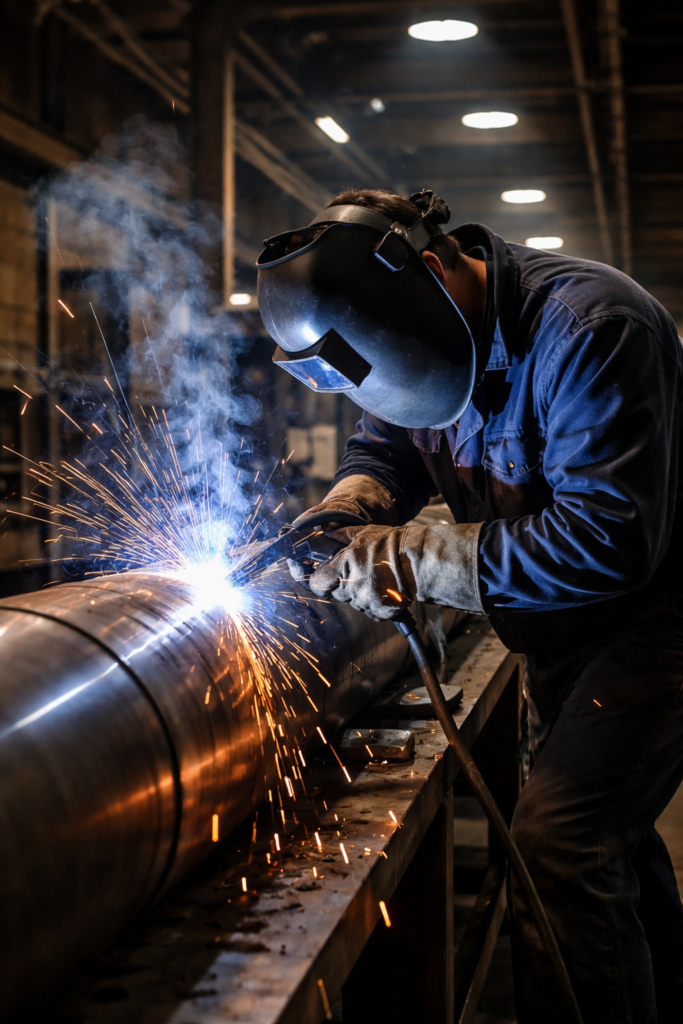
Welding offers strong earning potential and job stability. Entry-level welders often earn competitive wages, while experienced professionals with certifications can significantly increase their income. Specialized welders frequently command premium pay.
Career paths include inspection, quality control, training, and management. Some welders also start their own fabrication businesses. Continuous learning is key because welding technology continues to evolve.
Complete Welding Safety Equipment Checklist
| Equipment Category | Essential Items | Protection Provided |
| Eye and Face Protection | Auto-darkening welding helmet, safety glasses, face shield | UV/IR radiation, arc flash, flying debris, sparks |
| Respiratory Protection | Half-mask respirator, PAPR, SAR | Welding fumes, toxic gases, metal particulates |
| Hand Protection | Flame-resistant leather welding gloves | Burns, cuts, electric shock, heat exposure |
| Body Protection | Flame-resistant jacket, pants, leather apron | Sparks, spatter, hot metal, UV exposure |
| Foot Protection | Steel-toed, high-top leather boots | Falling objects, hot metal, sparks, crushing hazards |
| Additional Safety Equipment | Fire extinguisher, fire blanket, first aid kit, ventilation | Fire hazards, emergency response, air quality |
Getting Started: Your Path to Welding Mastery
Most welders begin by learning the fundamentals through vocational programs, community colleges, or apprenticeships. These paths combine theory with hands-on practice. Hobbyists can also explore introductory classes before committing to formal training.
Professional organizations provide certifications that validate skills and improve job prospects. These credentials help welders advance and specialize throughout their careers.
Frequently Asked Questions About Welding Fundamentals
What are the 5 fundamentals of welding?
The five core fundamentals of welding include: (1) Understanding the fusion process and how heat creates metallurgical bonds between metals; (2) Mastering arc creation and control, including proper current settings and electrode manipulation; (3) Implementing effective arc shielding to protect the weld from atmospheric contamination; (4) Selecting and using appropriate filler metals and electrodes that match the base material properties; and (5) Following essential safety protocols including proper use of personal protective equipment and hazard awareness.
What are welding fundamentals?
Welding fundamentals encompass the essential knowledge and skills required to join metals through fusion processes. It also covers the science behind metal transfer mechanisms, the importance of proper electrical circuits and ground connections, and the principles of creating strong metallurgical bonds that match or exceed the strength of parent materials. These core concepts provide the foundation that all welders build upon throughout their careers.
Can welders make $100,000 a year?
Yes, welders can absolutely earn six-figure incomes, though this typically requires specialized skills, certifications, or working in demanding fields. Underwater welders, pipeline welders working in remote locations, welders in the aerospace or nuclear industries, and those with advanced certifications in specialized processes often earn $100,000 or more annually.
What is the golden rule in welding?
The golden rule in welding is often stated as “cleanliness is next to godliness” or more specifically, “proper preparation prevents poor performance.” This emphasizes that the quality of any weld begins with thorough preparation of the base materials and weld joint.
What is the hardest welding to learn?
TIG (GTAW) welding is widely considered the most difficult welding process to master due to the level of coordination and control required. Unlike MIG or stick welding, TIG welding demands that the welder simultaneously control the torch position and angle with one hand, feed filler rod with the other hand, and often operate a foot pedal to adjust amperage—all while maintaining a precise arc length of just a few millimeters and watching the weld pool to ensure proper fusion and penetration.