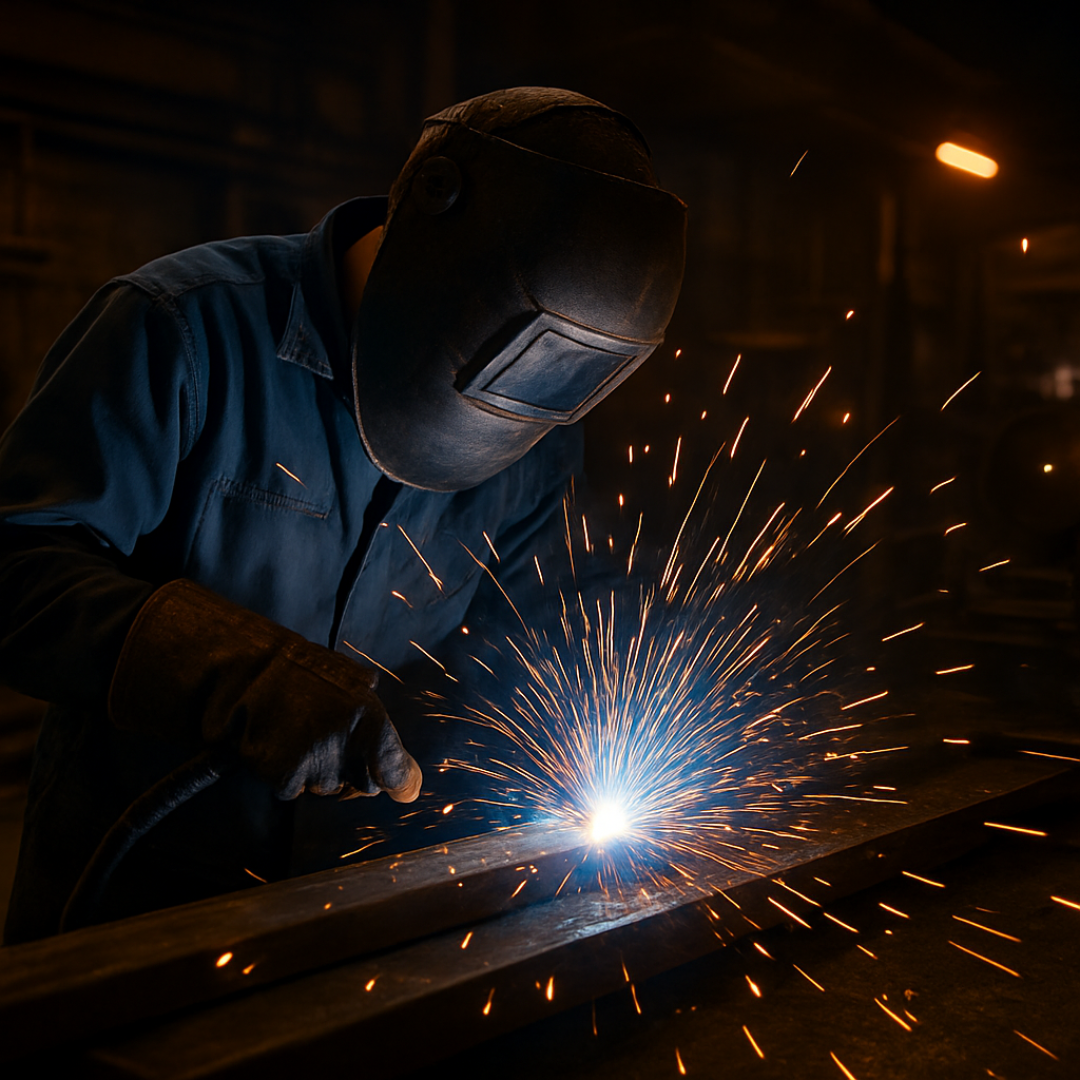
Introduction to Welding Basics for Beginners
Welding basics for beginners means learning how metals are safely joined using heat, understanding the most common welding methods, knowing essential tools, and following strict safety rules so you can create strong, clean welds without risking injury. For anyone starting, welding is not about mastering everything at once—it’s about building a solid foundation, developing good habits, and practicing fundamental techniques that apply to almost every welding job.
Welding is used in construction, automotive repair, manufacturing, agriculture, and even creative metal art. Because of this wide application, learning the basics gives you a skill that is practical, valuable, and highly transferable. This guide is designed to walk you through welding in a clear, connected way—from what welding is, to the tools you need, to the rules you must always follow—so you can start with confidence.
What Is Welding, and How Does It Work?

Welding is a fabrication process that joins two or more metal pieces by applying high heat until the metal melts and fuses together. In most welding processes, an electric arc or flame creates enough heat to melt the base metal, and sometimes a filler metal is added to strengthen the joint. Once the molten metal cools, it forms a solid bond that is often as strong as, or stronger than, the original material.
Unlike soldering or brazing, welding melts the base metal itself, which is why welded joints are commonly used in structures that need to carry weight or withstand stress. For beginners, understanding this basic principle is important because it explains why preparation, heat control, and safety are so critical from the very first weld.
Why Learning Welding Basics Matters
Starting with proper welding basics helps beginners avoid bad habits that are difficult to fix later. Good fundamentals improve weld quality, reduce mistakes, and most importantly, keep you safe. Welding involves extreme heat, bright light, electricity, and fumes, so knowing what you are doing is not optional—it is essential.
Learning the basics also makes it easier to transition between different welding processes. While each method has unique techniques, the core principles, such as joint preparation, heat control, and safety, remain the same. This means time spent learning the basics is never wasted.
Common Types of Welding for Beginners
There are many welding methods, but beginners usually start with a few common ones that are easier to learn and widely used. Understanding the differences helps you choose the right process for your goals.
MIG Welding (Gas Metal Arc Welding)
MIG welding is often recommended for beginners because it is relatively easy to learn and produces clean welds. It uses a continuously fed wire electrode and shielding gas to protect the weld from contamination. MIG welding is commonly used for automotive work, home projects, and light fabrication.
Stick Welding (Shielded Metal Arc Welding)
Stick welding uses a consumable electrode coated with flux. When heated, the flux creates a protective gas shield around the weld. This method is durable and works well outdoors, making it popular in construction and repair work. While it takes more practice than MIG welding, it is very versatile.
TIG Welding (Gas Tungsten Arc Welding)
TIG welding uses a non-consumable tungsten electrode and requires more skill and coordination. It produces very clean and precise welds and is often used for thin metals and detailed work. Beginners can learn TIG welding, but it usually comes after mastering simpler methods.
Flux-Cored Arc Welding
Flux-cored welding is similar to MIG welding but uses a wire with a flux core. This allows welding without an external shielding gas in some cases. It is commonly used for thicker materials and outdoor work.
Beginner-Friendly Welding Types Comparison
| Welding Type | Difficulty Level | Best For Beginners | Common Uses | Indoor/Outdoor |
| MIG Welding | Easy | Yes | DIY, automotive, fabrication | Mostly indoor |
| Stick Welding | Medium | Yes | Construction, repairs | Indoor & outdoor |
| TIG Welding | Hard | No (advanced) | Precision work, thin metals | Mostly indoor |
| Flux-Cored Welding | Medium | Yes | Heavy-duty welding | Indoor & outdoor |
This comparison shows why MIG and stick welding are usually the first choices for beginners, as they balance ease of learning with practical application.
Essential Welding Tools and Equipment
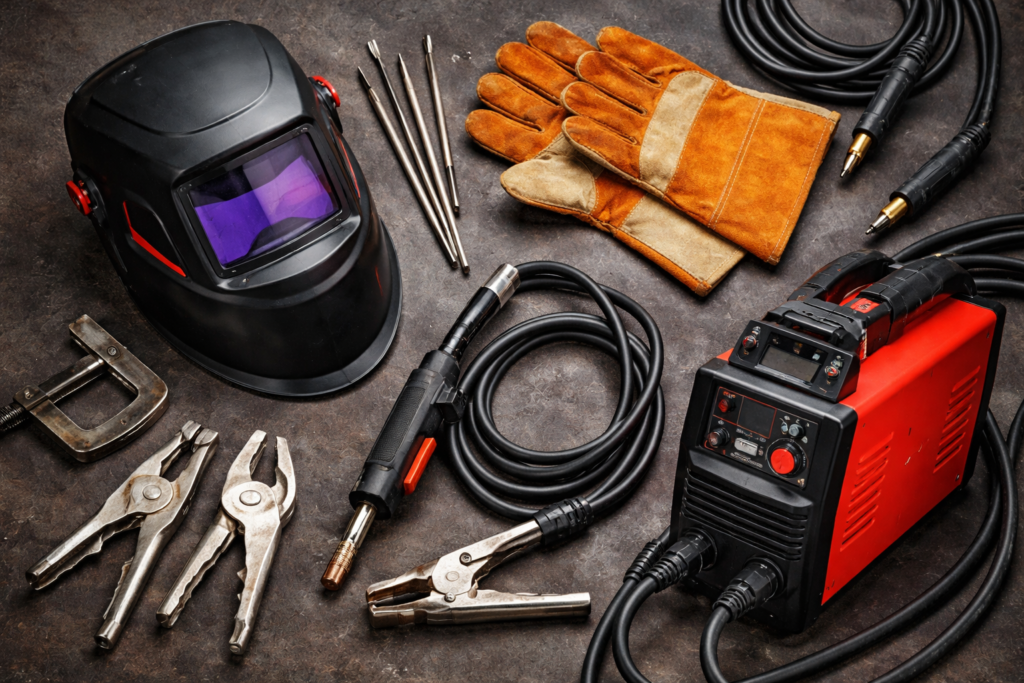
Every beginner welder needs the right tools to work safely and effectively. While equipment can vary depending on the welding method, some items are essential across all processes.
A welding machine is the core tool, and beginners often choose a multi-process welder to practice different techniques. A welding helmet with proper shade protects your eyes from intense arc light, while gloves and flame-resistant clothing protect your skin from heat and sparks. Clamps, wire brushes, and grinders help prepare and finish welds properly.
Having proper equipment not only improves weld quality but also builds confidence, allowing beginners to focus on technique rather than worrying about safety.
Welding Safety Basics Every Beginner Must Follow
Safety is the foundation of welding basics for beginners. Welding produces sparks, intense light, fumes, and extreme heat, all of which can cause serious injuries if ignored.
Always wear protective gear before striking an arc. Make sure your workspace is well-ventilated to avoid inhaling fumes. Keep flammable materials away from your work area and always have a fire extinguisher nearby. These habits should become automatic, because even experienced welders rely on the same safety rules every day.
Basic Welding Safety Checklist
| Safety Item | Purpose | Why It Matters |
| Welding Helmet | Eye and face protection | Prevents arc eye and burns |
| Welding Gloves | Hand protection | Shields from heat and sparks |
| Protective Clothing | Body protection | Reduces burn risk |
| Ventilation | Fume control | Protects lungs |
| Fire Extinguisher | Emergency response | Prevents fire spread |
This checklist highlights the minimum safety requirements every beginner should follow before starting any welding task.
Basic Welding Preparation Techniques
Before welding, proper preparation ensures strong and clean welds. This includes cleaning the metal to remove rust, oil, and paint, as contaminants can weaken the weld. Measuring and fitting the metal pieces correctly also improves alignment and strength.
Grinding edges and securing materials with clamps helps maintain consistency while welding. These preparation steps may seem simple, but they play a major role in achieving quality results, especially for beginners.
Practicing Fundamental Welding Techniques
Beginners should focus on basic techniques such as maintaining a steady hand, controlling travel speed, and keeping a consistent arc length. Practicing straight beads on scrap metal is one of the best ways to build muscle memory.
Learning how the molten weld pool behaves helps beginners understand when adjustments are needed. Over time, these small improvements add up, making welding smoother and more controlled.
Common Beginner Welding Mistakes
Many beginners struggle with issues such as poor penetration, uneven beads, or excessive spatter. These problems are often caused by incorrect settings, dirty metal, or rushed movements.
Recognizing mistakes early allows beginners to adjust and improve faster. Welding is a skill built through repetition, patience, and careful observation.
FAQs About Welding Basics for Beginners
What are the 5 basics of welding?
The five basics of welding are safety, proper equipment, correct welding method, clean metal preparation, and controlled technique. Together, these fundamentals ensure strong and safe welds.
What should a beginner welder know?
A beginner welder should know basic safety rules, how welding works, common welding types, essential tools, and how to practice simple techniques before moving to advanced projects.
What are the 5 basic weld types?
The five basic weld types are fillet welds, groove welds, butt welds, lap welds, and corner welds. These joint types are commonly used across many welding applications.
What is the golden rule in welding?
The golden rule in welding is safety first. Always protect your eyes, skin, and lungs before starting any welding task.
What is the number one rule in welding?
The number one rule in welding is never weld without proper protective equipment, as even a single exposure can cause serious injury.