Welding safety basics refer to the essential protective equipment, hazard awareness, machine precautions, and safe work habits that prevent burns, electric shock, toxic fume exposure, arc flash injuries, and workplace fires. Because welding combines high heat, electrical current, intense light radiation, and airborne contaminants, safety is not just recommended; it is fundamental to every successful weld.
Every time a welder strikes an arc, multiple risk factors activate at once. The metal heats beyond thousands of degrees, sparks scatter in unpredictable directions, ultraviolet radiation becomes instantly harmful, and fumes rise invisibly into the breathing zone. Without proper precautions, these elements can cause immediate injuries or long-term health damage.
Understanding welding safety is not about memorizing rules; it is about building a system of protection that becomes second nature. This guide walks through hazards, PPE, environmental controls, machine risks, safety rules, and proven prevention strategies in a structured, practical way.
Why Welding Safety Must Always Come First
Welding is often viewed as a technical skill, but safety is what makes that skill sustainable. A strong weld means nothing if the welder is injured in the process.
When safety is prioritized:
- Productivity increases because accidents cause fewer interruptions.
- Equipment lasts longer due to proper handling.
- Work quality improves because the welder can focus fully.
- Long-term health risks are significantly reduced.
In short, safe welding is efficient welding.
Understanding the Real Hazards Behind Every Arc
Before discussing protection, it is critical to understand what you are protecting yourself from. Welding hazards are not isolated; they often overlap and compound each other.
Radiation Exposure: UV and IR Light
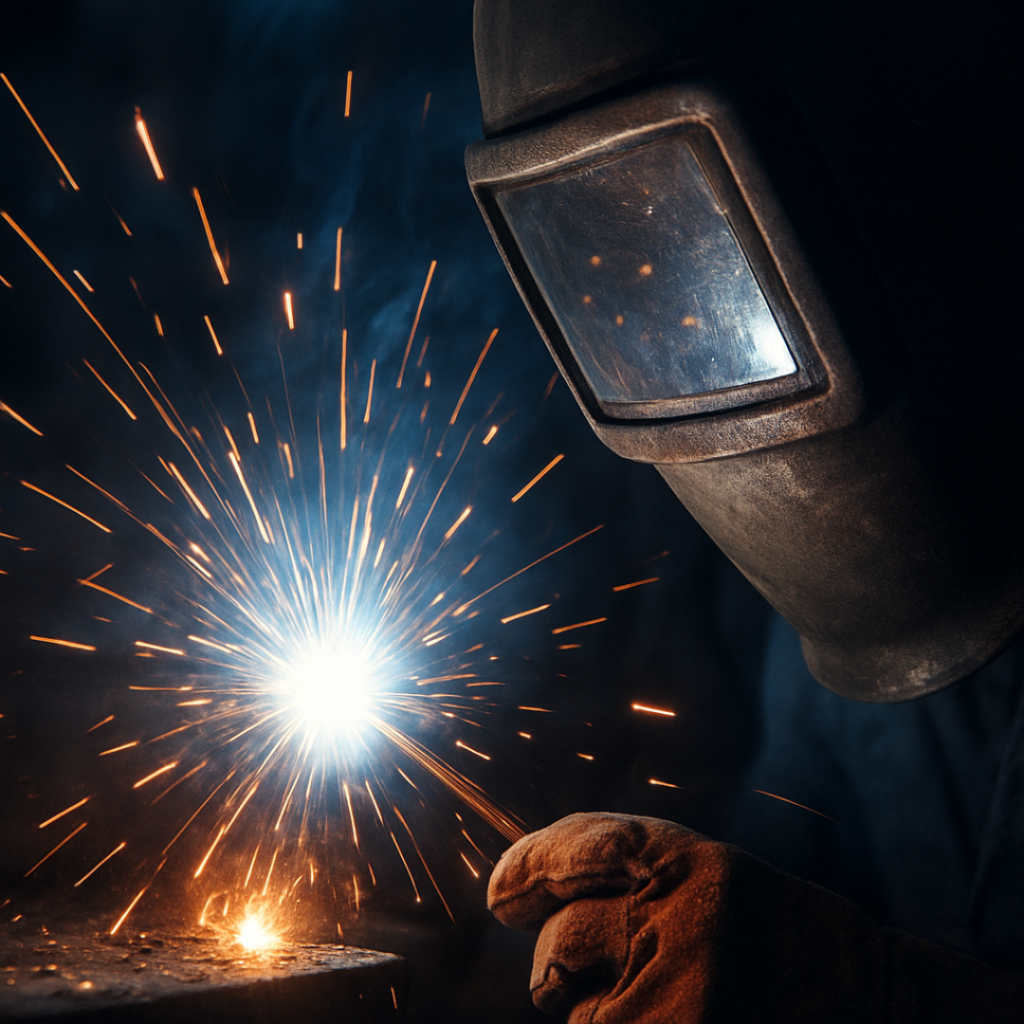
The welding arc produces ultraviolet (UV) and infrared (IR) radiation. UV radiation can cause “arc eye,” a painful condition where the cornea becomes inflamed after exposure. Symptoms often appear hours later, which makes it deceptively dangerous. Prolonged exposure may increase the risk of long-term eye damage.
Infrared radiation generates intense heat that can burn exposed skin. Even brief exposure without proper clothing can result in redness or blistering.
This is why helmets with proper shade ratings are non-negotiable and why exposed skin must always be covered.
Fumes and Gases: The Invisible Threat
Welding fumes are often underestimated because they are not always visible. However, they may contain metal oxides and gases such as ozone and nitrogen oxides. Depending on the material, exposure can cause:
- Respiratory irritation
- Metal fume fever
- Chronic lung conditions
- Long-term health complications
Ventilation systems remove contaminants before they accumulate. In confined spaces, respirators become essential because airflow may not be sufficient on its own.
Good ventilation is not about comfort; it is about long-term health protection.
Electric Shock: The Most Dangerous Welding Hazard
Electric shock remains one of the most serious risks in welding. It occurs when the body becomes part of the electrical circuit.
Wet floors, damp gloves, damaged cables, and improper grounding dramatically increase the likelihood of shock. Because welding machines operate with high current, contact with live components can be fatal.
Prevention requires:
- Dry working conditions
- Insulated gloves and boots
- Proper grounding
- Daily cable inspection
Electrical safety must be treated as a priority every single day.
Fire and Explosions: Managing Spark Travel
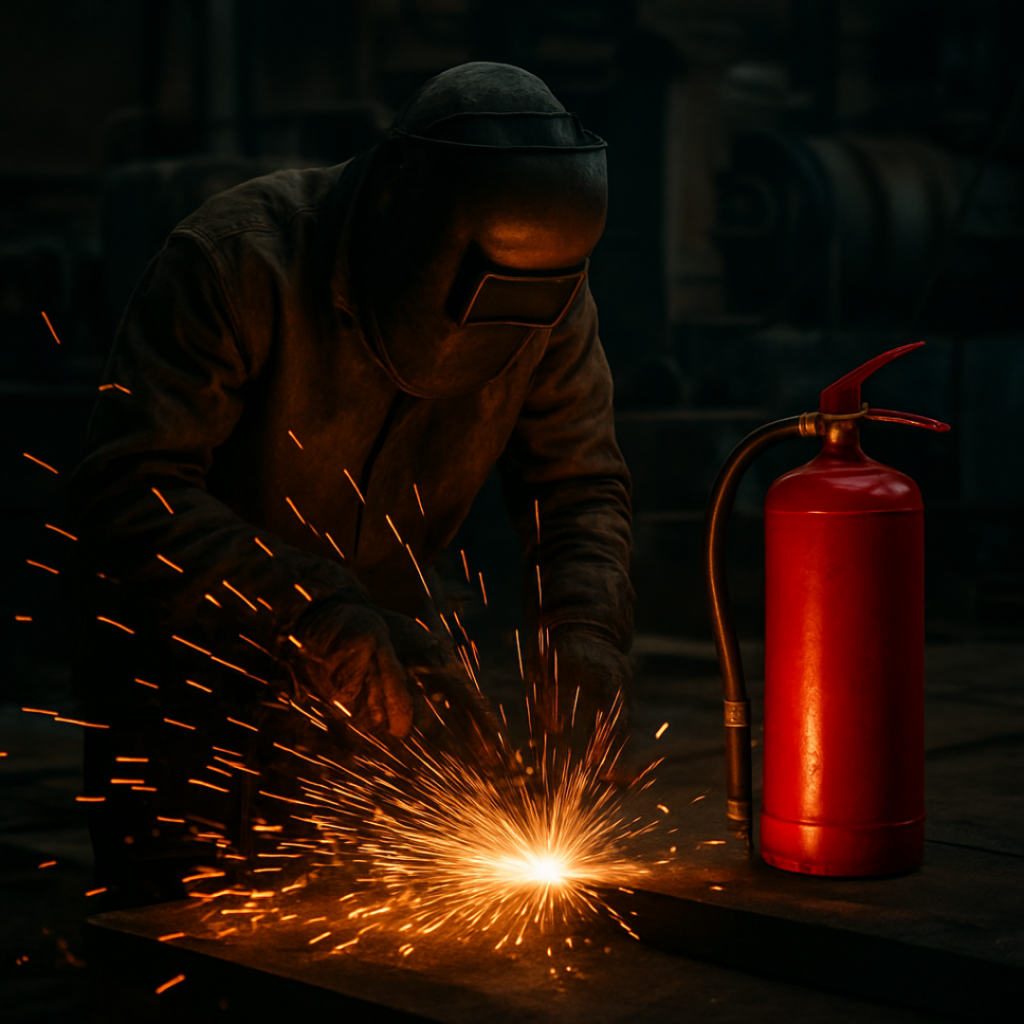
Welding produces sparks and molten metal fragments that can travel farther than expected. Flammable materials such as paper, solvents, wood, or fuel vapors can ignite instantly.
The solution is preparation:
- Clear combustibles from the work area
- Keep fire extinguishers within reach
- Use fire-resistant blankets where needed
- Implement a fire watch after welding
Fire prevention is proactive, not reactive.
Noise and Long-Term Strain
Noise from cutting and welding operations may exceed safe levels over time. Hearing damage develops gradually, which is why protection is often overlooked.
Additionally, repetitive posture strain can cause musculoskeletal issues. Adjustable workstations, scheduled breaks, and ergonomic tools reduce long-term injury risk.
Essential Welding PPE: Your First Line of Defense

Personal Protective Equipment works as a layered safety system. Each layer addresses a different hazard.
Core Welding PPE Overview
| PPE Item | Why It Matters | Primary Protection |
| Welding Helmet | Filters harmful light | UV/IR radiation, arc flash |
| Safety Glasses | Shields from debris | Flying sparks |
| Flame-Resistant Jacket | Resists ignition | Burns, molten metal |
| Welding Gloves | Insulates hands | Heat and electric shock |
| Safety Boots | Protects feet | Falling objects, hot slag |
| Respirator | Filters airborne particles | Toxic fumes |
| Ear Protection | Reduces noise exposure | Hearing damage |
Wearing PPE consistently builds a habit that dramatically reduces injury probability.
Welding Machine Safety: Understanding Equipment Risks
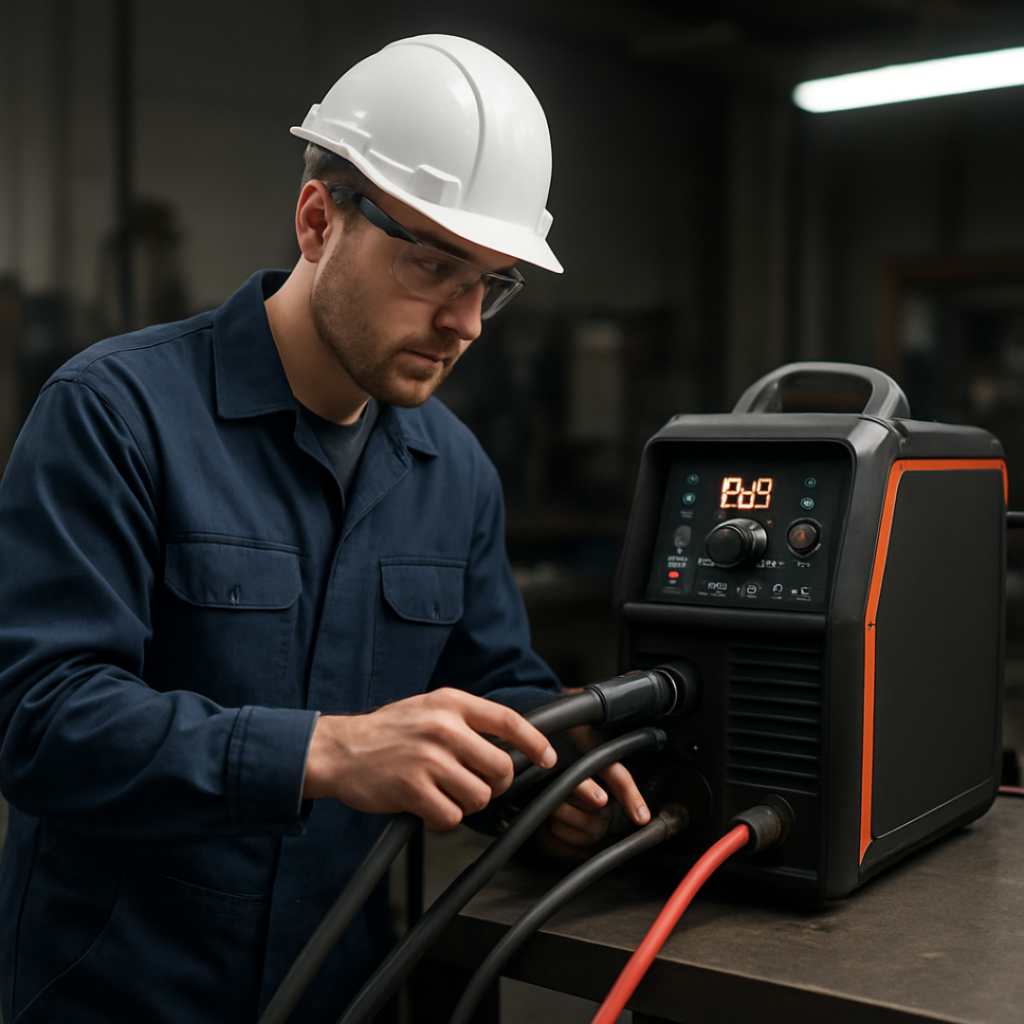
Machines themselves can introduce hazards if not respected.
Open Circuit Voltage (OCV)
Some welding machines operate with significant open circuit voltage. Voltage reduction devices lower this risk during idle conditions, providing additional protection.
Duty Cycle and Overheating
Every machine has a duty cycle rating. Exceeding this limit causes overheating and potential fire hazards. Respecting these limits preserves both safety and equipment lifespan.
Cable and Connection Inspections
Frayed cables or loose terminals are common but preventable hazards. A simple pre-use inspection can prevent serious incidents.
The 10-Foot Circle of Safety
The 10-foot circle of safety means maintaining at least a 10-foot radius around your welding area free from flammable materials.
Inside this safety perimeter:
- Remove combustible debris
- Shield immovable materials
- Restrict unauthorized access
This buffer zone prevents sparks from turning into uncontrolled fires.
10 Welding Safety Rules, Explained Clearly
- Wear full PPE before striking an arc.
Protection must be in place before work begins, not halfway through. - Ensure proper ventilation.
Airflow prevents toxic buildup. - Keep fire protection nearby.
Response time matters during emergencies. - Inspect equipment daily.
Small issues become large hazards quickly. - Respect duty cycle limits.
Machines overheat when pushed too far. - Keep the workspace dry and organized.
Water increases electrical danger. - Use correct welding techniques.
Proper technique improves both safety and weld quality. - Never weld on sealed containers.
Residual vapors may cause explosions. - Follow established safety policies.
Standards exist for a reason. - Stay alert and avoid fatigue.
Fatigue leads to poor judgment and mistakes.
Do’s and Don’ts in Welding
| Do | Why It Matters |
| Wear PPE consistently | Protects from immediate injury |
| Maintain ventilation | Prevents respiratory damage |
| Inspect cables daily | Reduces shock risk |
| Keep extinguishers ready | Ensures quick emergency response |
| Follow machine ratings | Prevents overheating |
| Don’t | Why It’s Dangerous |
| Weld in wet areas | Increases electrocution risk |
| Use damaged cables | Causes short circuits |
| Skip eye protection | Leads to arc flash injuries |
| Ignore fumes | Causes long-term lung issues |
| Rush procedures | Leads to preventable accidents |
Welding safety basics are the structural foundation of every successful welding project. From radiation protection and ventilation to machine inspections and fire prevention, each measure works together to reduce risk.
Safety is not separate from welding skill; it is part of the skill itself. When hazards are understood, equipment is respected, and protective systems are followed consistently, welding becomes both efficient and controlled.
A safe workspace does not happen by accident. It is created through preparation, discipline, and a commitment to doing every job the right way.
FAQs
What is the first rule of safety?
Always wear complete personal protective equipment before welding.
What is the formula for safety?
Hazard awareness + proper equipment + controlled environment + consistent habits.
Do’s and don’ts in welding?
Do wear PPE and inspect equipment. Don’t weld in wet areas or use damaged cables.
What is the 10-foot circle of safety?
A 10-foot cleared radius around the welding area is free from flammable materials.
What are the four golden rules of safety?
Wear PPE, control the environment, inspect equipment, and never bypass safety steps.