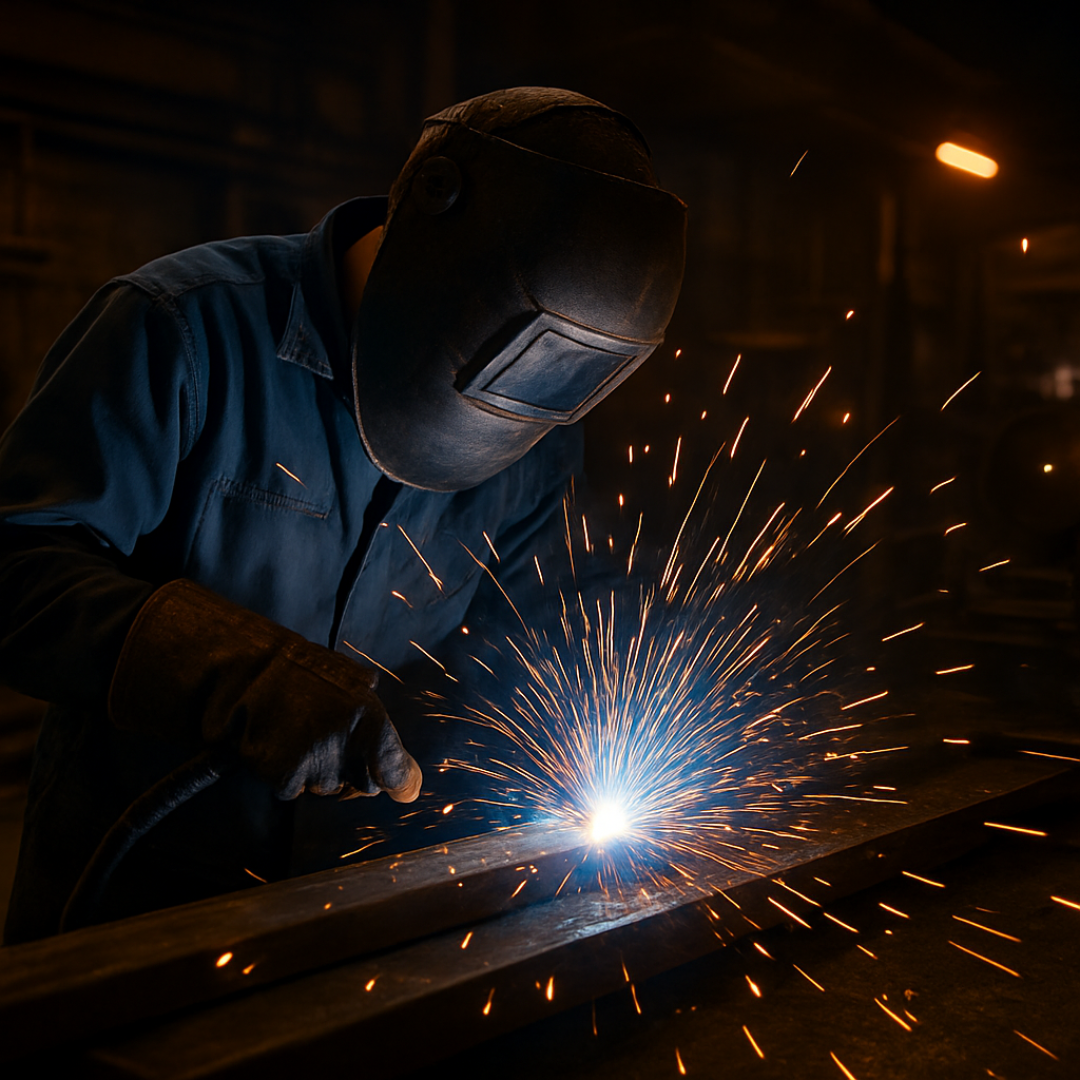
How welding works is based on a simple but powerful principle: intense heat (and sometimes pressure) melts metal at the joint, allowing atoms from separate pieces to bond together as the material cools and solidifies into one continuous structure. While the concept sounds straightforward, the real process involves electrical arcs, shielding systems, filler materials, and controlled heat input that together create strong, durable welds.
From structural fabrication and automotive repair to industrial pipe systems, welding is one of the most essential metalworking processes in modern construction and manufacturing. Understanding how welding works gives you more than technical knowledge—it gives you control over strength, quality, and efficiency.
The Science Behind Welding
Welding relies on atomic bonding. When metals reach their melting temperature, their atomic structure becomes more active. As two molten surfaces touch, their atoms intermingle. Once the heat source is removed, the molten metal cools and solidifies into a unified mass.
This process is known as fusion, and it explains why properly executed welds can be as strong as—or stronger than—the original base metal.
There are two primary categories of welding:
- Fusion Welding: The base metals melt and fuse together.
- Solid-State Welding: Metals bond using pressure and mechanical energy without fully melting.
Most common shop and field welding techniques use fusion methods, particularly arc welding.
How an Arc Welding Machine Works
Arc welding uses electricity to create heat. The welding machine supplies controlled current to an electrode and a grounded workpiece. When the electrode briefly touches the metal and is slightly lifted, electricity jumps across the gap, forming an arc.
This arc can generate temperatures exceeding several thousand degrees, instantly melting metal and forming a weld pool.
However, molten metal reacts quickly with oxygen and nitrogen in the air. That is why shielding gas or flux is introduced to protect the weld pool and maintain structural integrity.
How Welding Works Step by Step
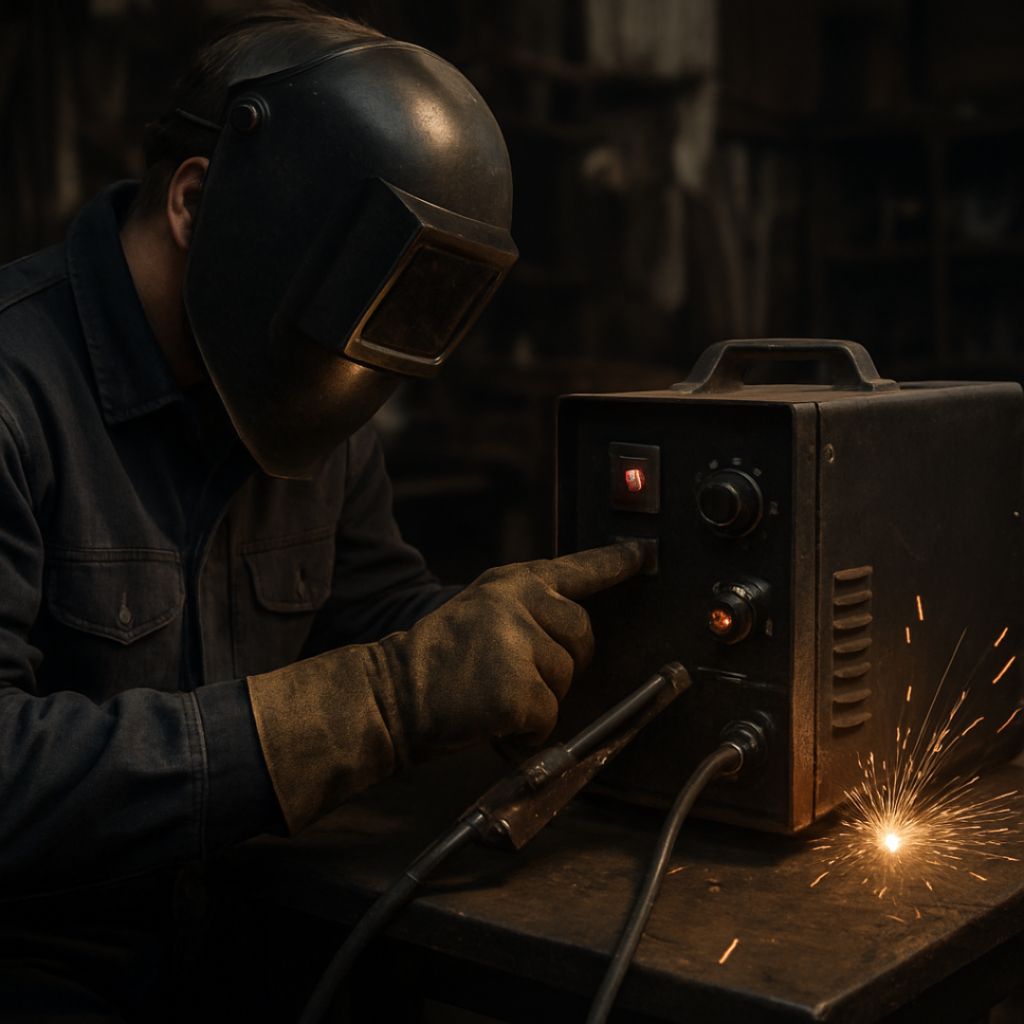
Understanding the process step by step makes the entire system easier to grasp.
1. Setting Up the Machine
Voltage, amperage, and polarity are adjusted according to metal thickness and welding method.
2. Grounding the Metal
A ground clamp connects the welding machine to the workpiece, completing the electrical circuit.
3. Positioning the Electrode
The electrode—stick rod, MIG wire, or tungsten for TIG—is placed at the joint.
4. Striking the Arc
The electrode touches the metal and slightly lifts, forming a high-temperature electrical arc.
5. Creating the Weld Pool
The arc melts the base metal and filler material, forming molten metal at the joint.
6. Shielding the Weld
Shielding gas or flux protects the molten metal from contamination.
7. Cooling and Solidification
As the welder moves forward, the molten metal cools and forms a solid, durable joint.
This controlled cycle of heating, melting, protecting, and cooling explains exactly how welding works step by step.
Common Welding Methods Compared
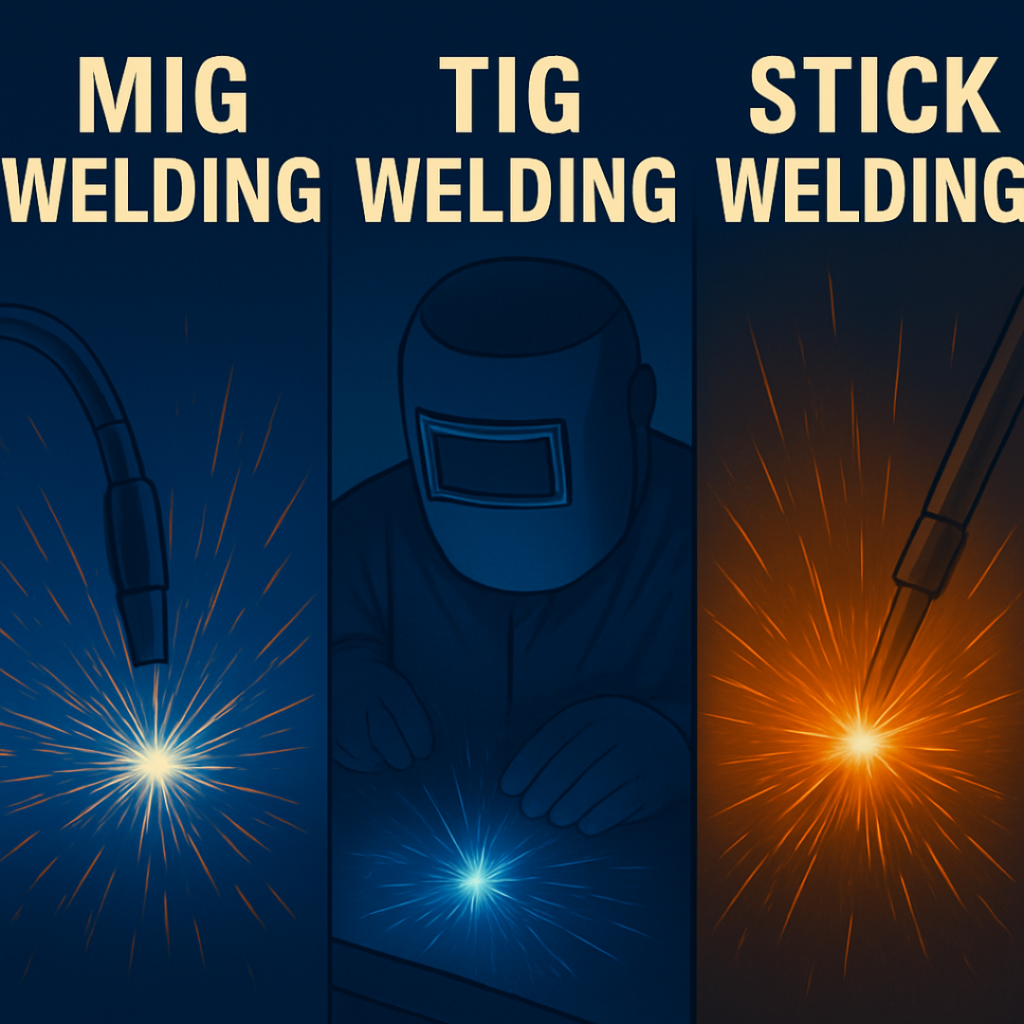
Different applications require different welding processes. Each method varies in precision, cost, and ease of learning.
Comparison of Popular Welding Processes
| Welding Type | Electrode Type | Shielding Method | Best Applications | Skill Level |
| Stick (SMAW) | Flux-coated rod | Flux creates gas shield | Outdoor repairs, heavy steel | Moderate |
| MIG (GMAW) | Continuous wire feed | External shielding gas | Sheet metal, fabrication | Beginner-friendly |
| TIG (GTAW) | Tungsten (non-consumable) | External shielding gas | Precision, aluminum, thin metals | Advanced |
| FCAW | Flux-cored wire | Flux or gas | Structural welding | Moderate |
| Laser Welding | Laser beam | Controlled environment | Industrial precision work | Specialized |
MIG welding is often the easiest for beginners because the wire feed system simplifies coordination. TIG welding, while more complex, produces extremely clean and precise welds.
Heat Control and Weld Quality
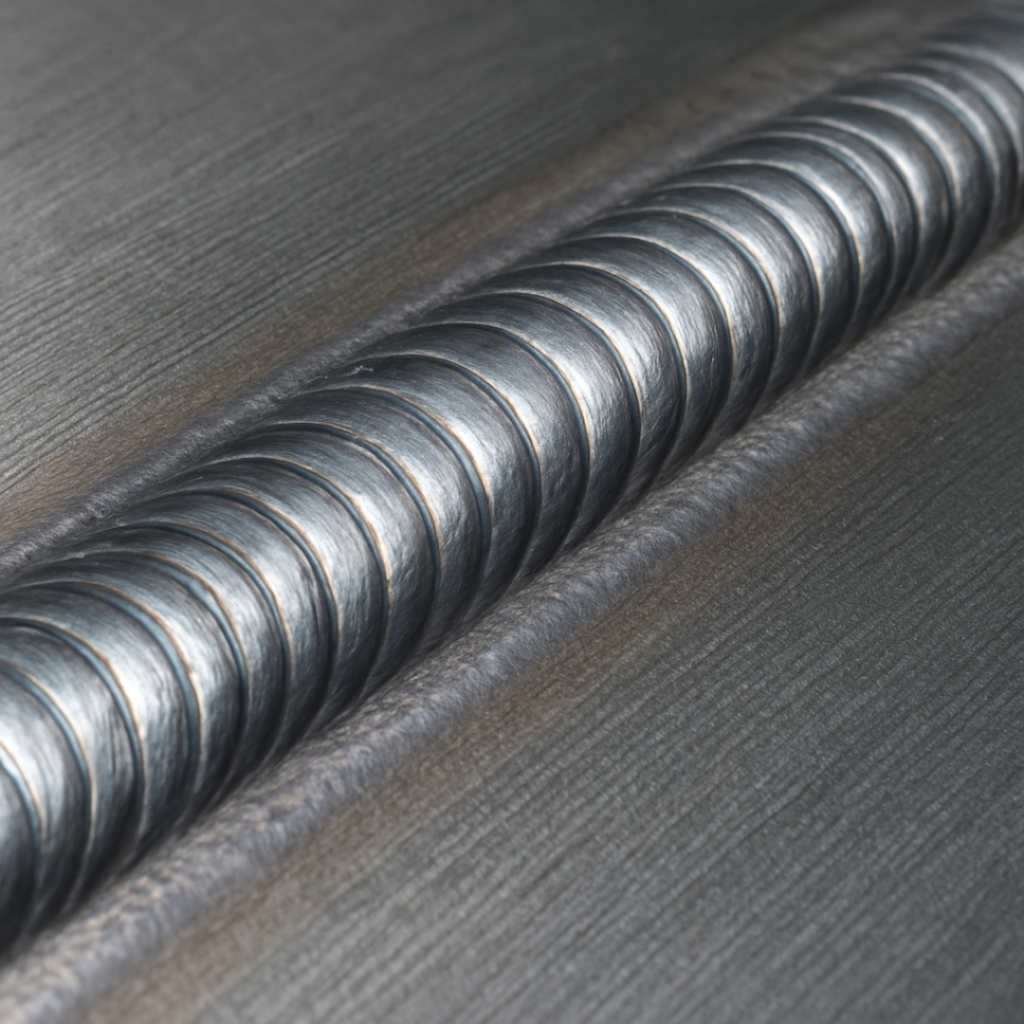
Heat input determines penetration depth, bead shape, and overall strength.
Too little heat leads to weak fusion.
Too much heat can cause burn-through or distortion.
Managing travel speed, electrode angle, and machine settings ensures proper fusion without damaging the base material.
Cooling rate also matters. Rapid cooling can create cracks in thicker metals, which is why preheating is sometimes required in structural applications.
Common Welding Mistakes and How to Prevent Them
Even skilled welders can experience defects. Recognizing problems early improves both performance and appearance.
Common Welding Defects and Prevention
| Defect | Cause | Prevention |
| Porosity | Contaminated metal or poor shielding | Clean surfaces and ensure steady gas flow |
| Undercutting | Excessive heat or travel speed | Adjust amperage and slow down |
| Cracking | Rapid cooling or stress | Preheat thicker materials |
| Incomplete Fusion | Insufficient heat or improper angle | Maintain correct arc length |
| Excess Spatter | Incorrect voltage or wire speed | Fine-tune machine settings |
Most welding mistakes stem from improper setup, inconsistent technique, or insufficient surface preparation.
Essential Welding Equipment

Every welding operation requires coordinated tools:
- Welding Machine: Supplies electrical power.
- Electrodes: Conduct current and may serve as filler.
- Welding Torch or Stinger: Directs heat and filler.
- Shielding Gas Cylinder: Protects molten metal.
- Protective Gear: Helmet, gloves, flame-resistant clothing, respirator.
Each component contributes to arc stability and weld strength.
Welding as a Career: Income and Opportunity
Welding offers strong earning potential, especially for those who specialize or work in demanding environments.
While reaching extremely high income levels is uncommon in entry-level shop positions, specialized contract work, industrial shutdown projects, underwater welding, or owning a fabrication business can significantly increase earnings.
Certain roles—such as pipeline welding, structural industrial welding, aerospace TIG welding, and industrial maintenance—can command higher hourly rates depending on certifications, experience, and working conditions.
Income grows with skill level, reputation, and specialization
Why Understanding How Welding Works Matters
When you understand how welding works—from atomic bonding to shielding gas protection—you gain the ability to troubleshoot problems, improve strength, and increase efficiency.
That knowledge reduces defects, improves productivity, and opens doors to more advanced opportunities.
Welding is not just about creating sparks. It is about controlled heat, protection from contamination, and proper technique working together to form a durable bond that holds under stress.
Master the fundamentals, and every weld becomes stronger, cleaner, and more reliable.
FAQs About How Welding Works
How does welding work step by step?
Master the fundamentals, and every weld becomes stronger, cleaner, and more reliable.
What are common welding mistakes?
Master the fundamentals, and every weld becomes stronger, cleaner, and more reliable.
Can welding be easy to learn?
Master the fundamentals, and every weld becomes stronger, cleaner, and more reliable.
Can you make $300,000 as a welder?
Master the fundamentals, and every weld becomes stronger, cleaner, and more reliable.
What welding jobs pay $50 an hour?
Master the fundamentals, and every weld becomes stronger, cleaner, and more reliable.