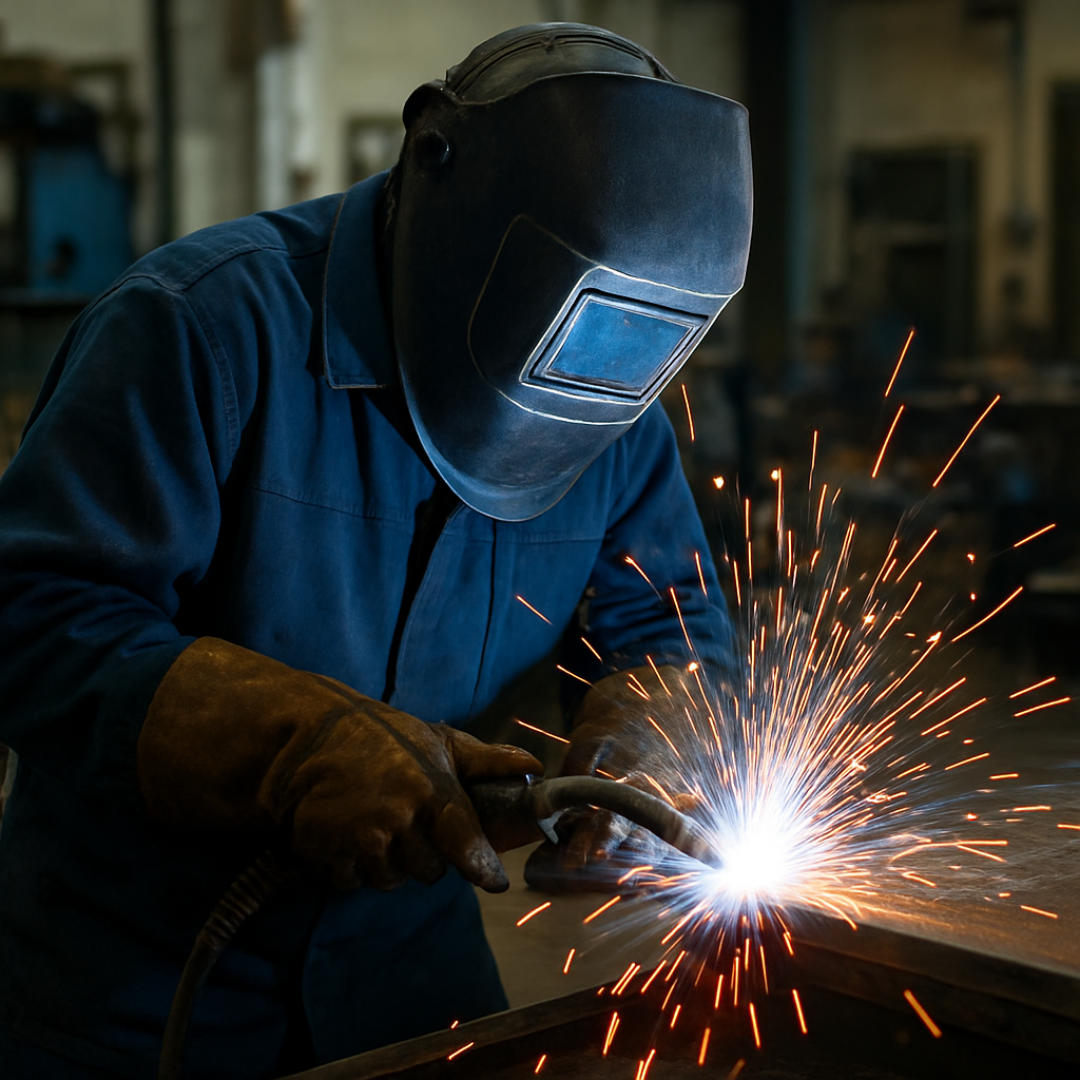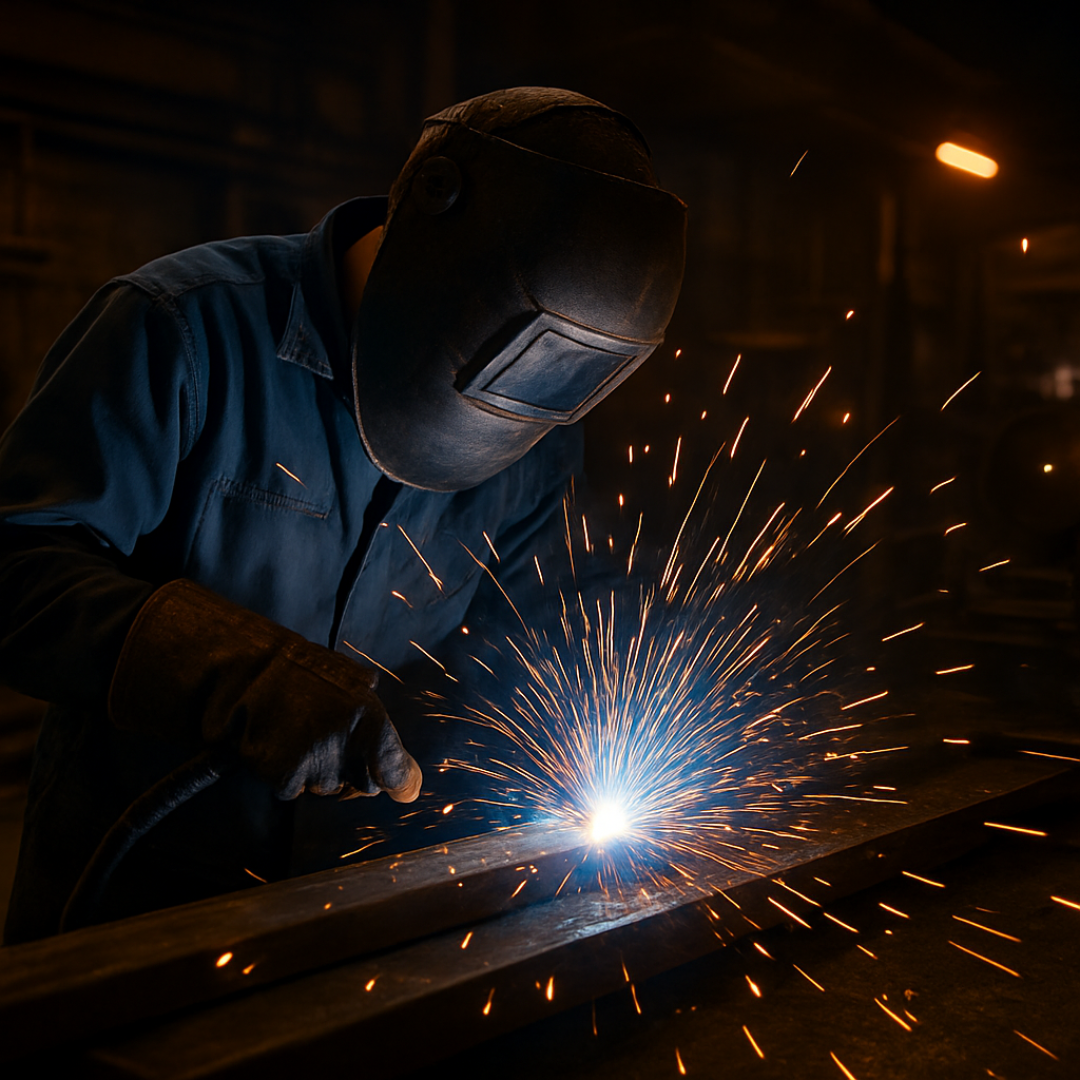
Welding processes come in several distinct types, each designed for specific applications and materials—the four most common being MIG (GMAW), TIG (GTAW), Stick (SMAW), and Flux-Cored Arc Welding (FCAW). Understanding these methods helps you select the right technique based on your material thickness, working environment, and desired weld quality. Whether you’re joining steel beams outdoors or crafting precision aluminum parts indoors, knowing which process matches your needs transforms good welds into exceptional ones.
Working with molten metal isn’t just about melting two pieces together; it’s about understanding the science, art, and precision behind each welding technique. The sparks that fly during welding represent more than just a spectacular light show; they’re the visible result of carefully controlled heat, precise metal transfer, and shielding gases protecting your work from contamination.
Why Understanding Different Welding Processes Matters
Selecting the wrong welding process can lead to weak joints, excessive spatter, porosity issues, or complete project failure. On the other hand, matching the right technique to your specific application ensures strong, reliable welds that stand the test of time. The difference between a structural beam that holds for decades and one that fails prematurely often comes down to process selection.
Modern welding encompasses over 30 recognized processes, though most professionals focus on mastering a core group of techniques. These methods differ in their heat sources, metal transfer mechanisms, shielding approaches, and operator control levels. Some excel at outdoor construction sites where portability matters, while others shine in controlled manufacturing environments where precision is paramount.
The Core Four: Most Popular Welding Techniques
MIG Welding (Gas Metal Arc Welding – GMAW)
MIG welding stands as the workhorse of modern fabrication shops, valued for its balance of speed, versatility, and user-friendliness. This semi-automatic process feeds wire continuously through a welding gun while shielding gas protects the weld pool from atmospheric contamination.
The magic of MIG welding lies in its four distinct metal transfer methods, each suited to different applications. Globular transfer creates larger droplets that work well for thick horizontal plates, though the resulting weld bead appears rougher with more spatter. Short-circuiting transfer taps the base metal many times per second, producing minimal spatter and allowing welding in virtually any position.
Spray transfer delivers tiny molten droplets in a steady stream, maintaining continuous arc contact, perfect for thick, flat horizontal pieces. Pulsed-spray takes this further by alternating between high and low current, creating micro-cooling periods that expand the range of usable metal thicknesses and welding positions. Even these “cooler” moments still reach several thousand degrees Fahrenheit; they’re only cooler relative to the peak temperature.
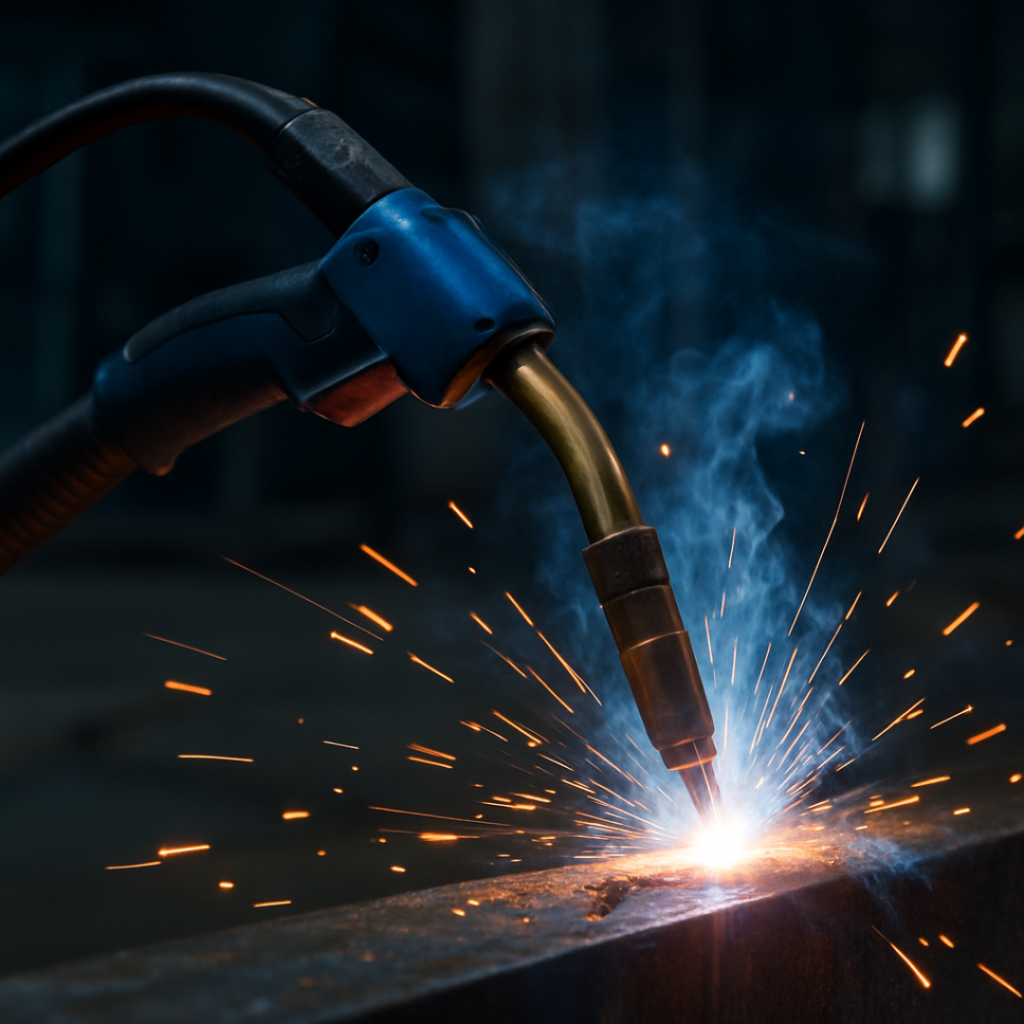
MIG welding dominates industrial settings because it combines high deposition rates with efficient electrode use. The continuous wire feed eliminates frequent stops to change electrodes, dramatically increasing productivity compared to stick welding. This makes it ideal for production environments where consistency and speed drive profitability.
However, MIG welding requires shielding gas, making it less suitable for windy outdoor conditions where gas coverage becomes unreliable. The process also offers limited operator control compared to TIG or stick welding, making it harder to compensate for inconsistencies in joint fit-up. Surface preparation is critical; paint, dirt, and grease contamination can compromise weld integrity.
TIG Welding (Gas Tungsten Arc Welding – GTAW)
TIG welding represents a precision instrument in the welder’s toolkit. This process uses a non-consumable tungsten electrode to create the arc while filler metal is added separately, giving operators exceptional control over heat input and metal deposition. The result? Some of the cleanest, highest-quality welds possible.
The process excels when joining stainless steel and non-ferrous metals like aluminum, titanium, and exotic alloys. Understanding material properties becomes crucial; stainless steel requires at least 11% chromium content and melts around 2,750°F, while carbon steel’s melting point ranges from 2,600 to 2,800°F.
Aluminum TIG welding showcases a welder’s true skill. This notoriously difficult material demands a steady hand, trained eye, and artistic touch due to aluminum’s high thermal conductivity and tendency to absorb contaminants. Successfully creating smooth, flawless aluminum welds requires patience and practice, but the results speak for themselves.
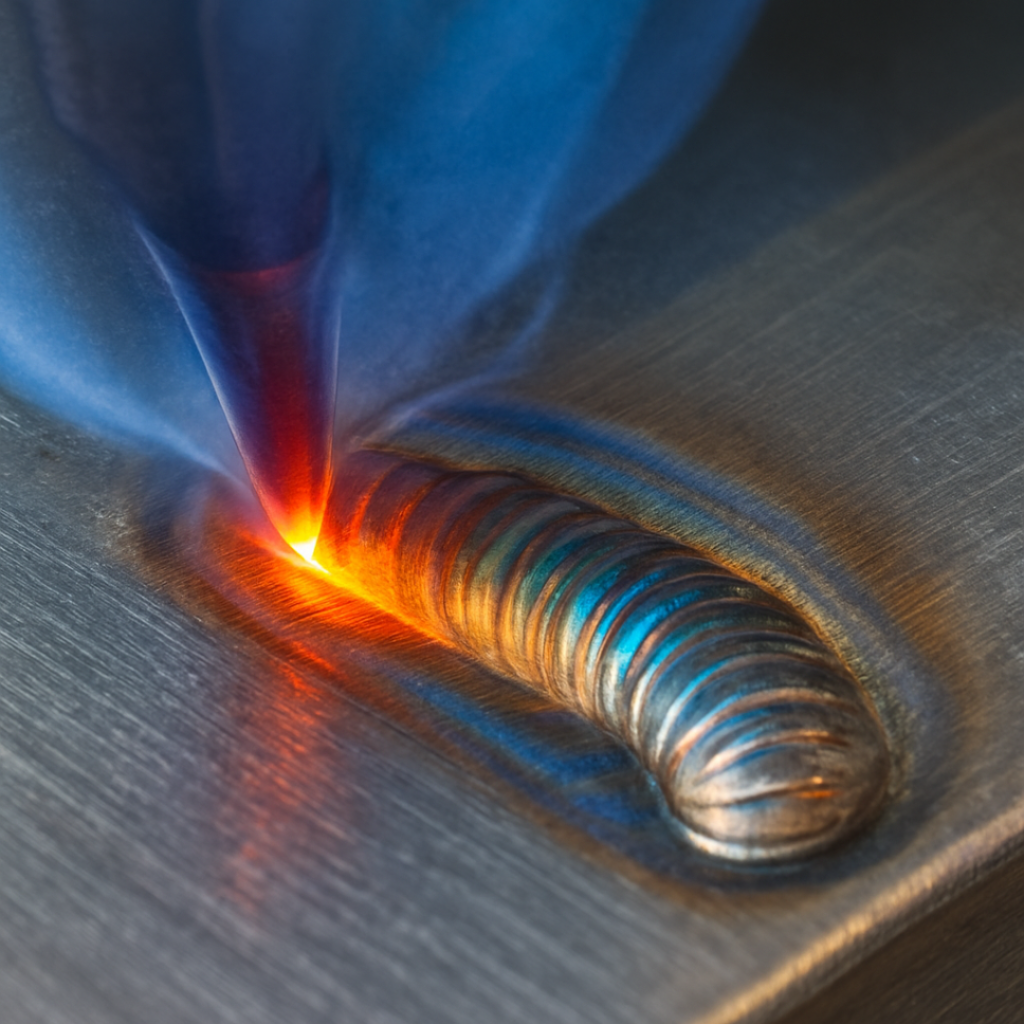
The advantages of TIG welding extend beyond quality. Welds require little to no post-cleaning, the process works with virtually any metal, and operators can weld in any position. The high degree of control lets skilled welders adjust on the fly, compensating for joint inconsistencies or changing conditions.
The trade-offs? TIG welding moves slowly with limited deposition rates, making it impractical for thick sections or high-production environments. The process is extremely sensitive to base metal impurities, demanding thorough pre-weld cleaning. Mastering TIG welding takes considerable time and practice; this isn’t the process for quick weekend projects.
Stick Welding (Shielded Metal Arc Welding – SMAW)
Stick welding remains the go-to choice for construction, pipeline work, and field repairs thanks to its unmatched portability and versatility. This manual process uses a consumable electrode coated in flux, which creates its own shielding gas when burned. The simplicity is beautiful; you need only a power source, ground cable, electrode holder, and electrodes.
The flux coating serves multiple purposes: it generates shielding gas to protect the weld, stabilizes the arc, and produces slag that floats impurities to the surface. After welding, this slag layer must be chipped or ground away to reveal the finished weld.
What makes stick welding indispensable is its resilience to harsh conditions. Wind, rain, dusty environments, and less-than-perfect surface preparation don’t stop stick welding the way they would halt MIG or TIG operations. Construction sites, remote locations, and outdoor repairs all benefit from this robustness.
The process works across an impressive range of materials, including carbon steel, stainless steel, cast iron, and even some applications with nickel and copper. Aluminum stick welding is possible but rarely used due to difficulty, especially out of position.
Stick welding’s limitations include lower electrode efficiency; you can’t burn the entire rod since a stub must remain in the holder. The need to stop and change electrodes frequently reduces productivity compared to continuous wire-feed processes. Slag removal adds another step to the workflow, though experienced welders integrate this efficiently into their routine.
Flux-Cored Arc Welding (FCAW)
Flux-cored arc welding emerged as a powerful alternative that combines MIG welding’s productivity with stick welding’s versatility. The process uses tubular wire filled with flux compounds, available in two varieties: self-shielded and dual-shield (gas-shielded).
FCAW shines in high-production environments and outdoor construction where speed matters. The flux-filled wire creates deep-penetrating welds at high deposition rates, making it excellent for thick materials. Variables like wire type, operating angle, voltage, polarity, and wire feed speed provide tremendous flexibility for different applications.
The semi-automatic nature enhances weld consistency while allowing higher amperages than MIG welding typically permits. This makes FCAW ideal for structural steel, heavy fabrication, and shipbuilding applications where strength and productivity converge.
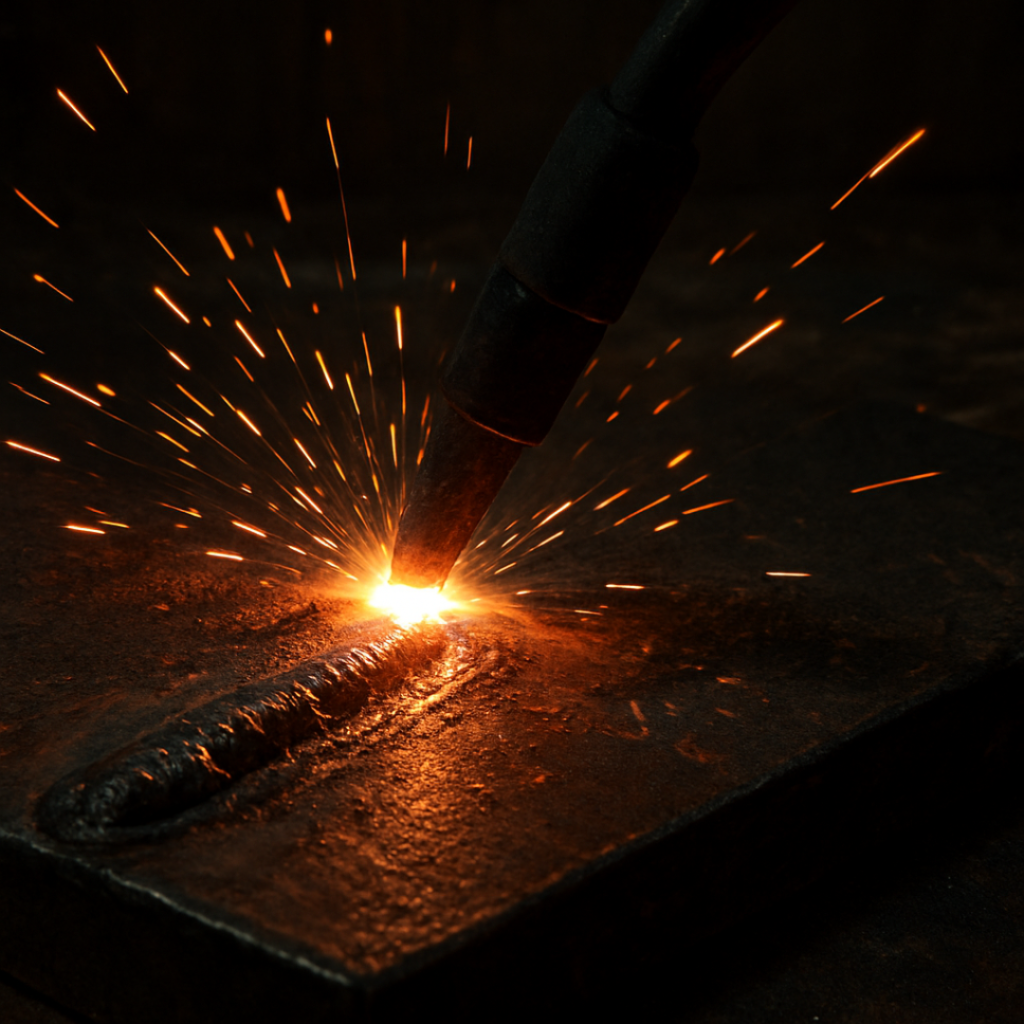
However, flux-cored welding generates substantial smoke and fumes, necessitating proper ventilation or outdoor use. The process is prone to porosity, tiny gas pockets that weaken welds, particularly when using dual-shield wire. Operators must watch for contamination and maintain proper shielding gas coverage. Like stick welding, completed welds require slag removal.
The deep-penetrating characteristics that make FCAW strong can also make porosity repair time-consuming and expensive. Drafty conditions that wouldn’t affect stick welding can cause problems with gas-shielded flux-cored wire. Despite these considerations, FCAW remains a production powerhouse where speed and strength matter most.
Comparison Table: The Four Main Welding Processes
| Feature | MIG (GMAW) | TIG (GTAW) | Stick (SMAW) | Flux-Cored (FCAW) |
| Ease of Learning | Easy | Difficult | Moderate | Moderate |
| Welding Speed | Fast | Slow | Moderate | Very Fast |
| Weld Quality | Good | Excellent | Good | Good |
| Outdoor Use | Poor | Poor | Excellent | Good |
| Operator Control | Limited | Excellent | High | Moderate |
| Equipment Cost | Moderate | High | Low | Moderate |
| Consumable Efficiency | High | High | Moderate | High |
| Post-Weld Cleaning | Minimal | Minimal | Required (slag) | Required (slag) |
| Portability | Moderate | Low | Excellent | Moderate |
| Best For | Production, auto body | Precision, aluminum | Field work, repair | Heavy steel, construction |
Specialized Welding Processes for Advanced Applications
Beyond the core four methods, specialized processes serve niche industries requiring unique capabilities.
Plasma Arc Welding (PAW)
Plasma arc welding resembles TIG welding but uses a smaller arc and lower voltages, creating exceptional precision. Gas pressurized inside the welding torch creates plasma that becomes ionized and electrically conductive, generating incredibly high temperatures in confined spaces.
This precision makes PAW perfect for delicate applications like microchip assembly and medical device manufacturing. The automotive industry uses PAW for steel tubing in exhaust systems and chassis structures, while electronics manufacturers rely on it for welding thin chips and small metal components without heat damage.
Laser Beam Welding (LBW)
Laser beam welding uses concentrated light energy, easily integrating with robotic automation. The automotive sector benefits from laser welding’s productivity when assembling roof panels and doors. Carbon steels, stainless steel, titanium, and aluminum all respond well to this process.
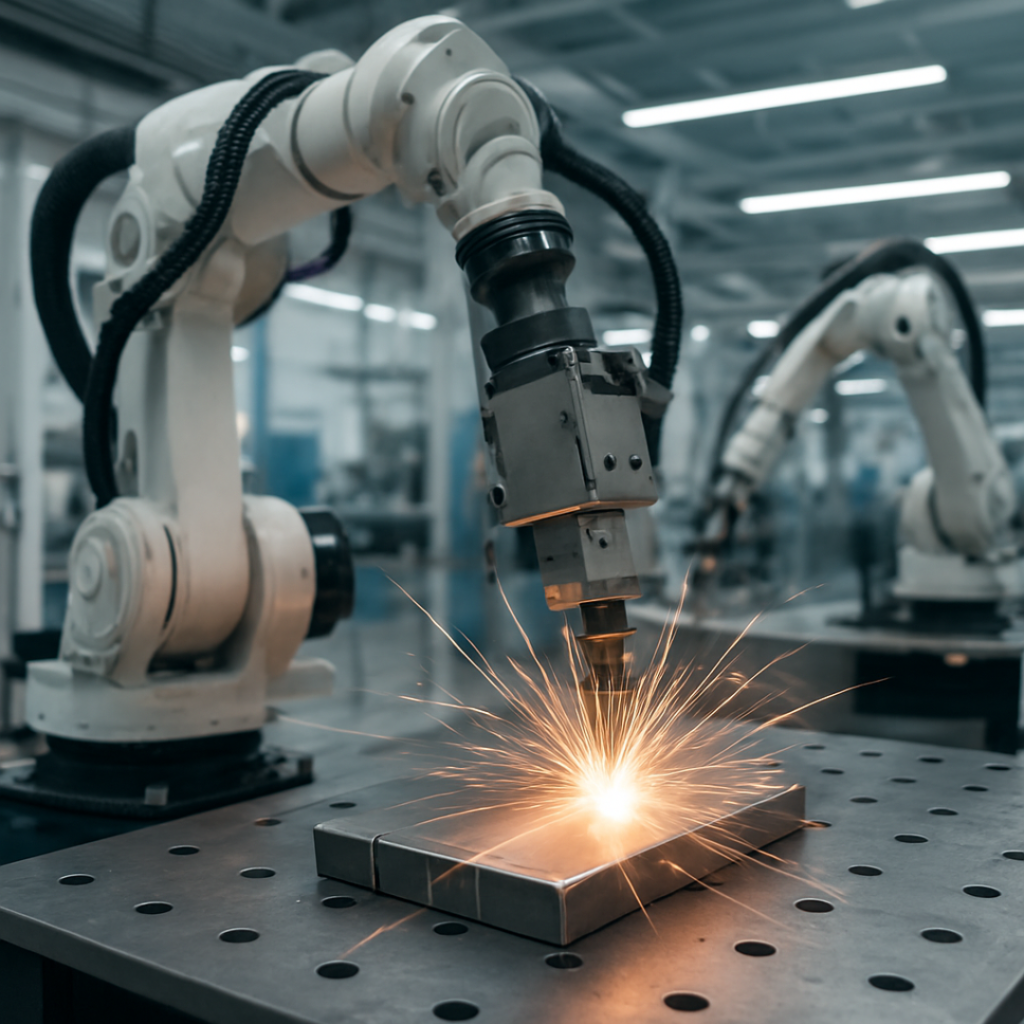
Beyond automotive, laser welding serves the medical devices, aerospace, and electronics industries. Equipment costs are substantial but justified in high-volume manufacturing where precision and consistency matter most.
Factors That Determine the Right Welding Process
Material Type and Characteristics
Material selection drives many process decisions. Carbon steel accepts most welding processes readily, with widely available equipment, filler metals, and electrodes for various grades and specifications. This versatility makes carbon steel forgiving for welders still developing their skills.
Stainless steel introduces unique characteristics requiring specific electrodes and sometimes specialized equipment. SMAW, MIG, and FCAW all work with stainless steel using the same equipment as carbon steel, making them excellent choices for thicker sections. However, welding stainless steel out of position challenges even experienced welders, making processes with greater operator control, like TIG or stick welding, preferable.
Aluminum demands special attention due to its high thermal conductivity and tendency to absorb contaminants like oils and grease. MIG welding with a spool gun works quickly and efficiently on thicker aluminum sections, while stick welding aluminum out of position proves extremely difficult without extensive practice.
TIG welding provides the control needed to manage aluminum’s quirks, allowing welders to adjust travel speed, heat input, and filler metal addition rate as they encounter subsurface contaminants or manage the material’s heat absorption. This control makes TIG the gold standard for aluminum work despite its slower speed.
Material Thickness Considerations
Thickness dramatically impacts process selection. Heavy plate sections benefit from high-deposition processes like flux-cored or submerged arc welding. Using TIG welding on heavy plate would be painfully slow and impractical.
Thin materials susceptible to distortion or burn-through require processes operating at lower amperages to minimize heat input. MIG welding dominates auto body repair for this reason, handling thin sheet metal without excessive distortion. The relationship between heat input and material thickness creates a sweet spot for each process.
Welding Position Requirements
Position significantly influences process choice. Flat position welding on heavy plate allows high-deposition methods to maximize productivity. Transitioning flux-cored welding out of position requires adjustments to wire size, heat settings, and travel speed.
Pipe welding presents unique challenges, requiring work in essentially all positions within a single joint. This demands processes offering high operator control, explaining why stick welding remains dominant in refineries and gas plants for pipeline work. Overhead welding tests both welder skill and process capabilities, favoring methods designed for operator control.
Application-Based Process Selection Table
| Application Type | Recommended Process | Why It Works Best |
| Outdoor Construction | Stick (SMAW) | Wind-resistant, portable, simple equipment |
| Auto Body Repair | MIG (GMAW) | Low heat input, works well on thin materials |
| Aluminum Fabrication | TIG (GTAW) | Precise control, clean welds, handles heat sensitivity |
| Pipeline Welding | Stick (SMAW) | All-position capability, field-proven reliability |
| Heavy Steel Fabrication | Flux-Cored (FCAW) | High deposition rates, deep penetration |
| Stainless Steel Pipe | TIG (GTAW) | X-ray quality welds, excellent control |
| Production Manufacturing | MIG (GMAW) or SAW | Speed, consistency, automation-friendly |
| Precision Electronics | Plasma Arc (PAW) | Minimal heat spread, extreme precision |
| Thick Plate (Flat) | Submerged Arc (SAW) | Highest deposition rates, automatic operation |
| Remote Field Repairs | Stick (SMAW) | Minimal equipment, works in harsh conditions |
Environmental and Workplace Conditions
Outdoor welding in windy conditions eliminates processes dependent on external shielding gas. Stick welding’s self-shielding flux coating makes it the industry standard for field work, capable of producing quality welds even in challenging weather.
Indoor environments with cleanliness requirements present different challenges. Medical facilities, food processing plants, and ultra-clean manufacturing areas may prohibit processes generating excessive sparks or fumes. TIG welding’s minimal fume generation and absence of sparks make it ideal for these sensitive environments.
Frequently Asked Questions
What are the four types of welding processes?
The four main welding processes are MIG (Gas Metal Arc Welding), TIG (Gas Tungsten Arc Welding), Stick (Shielded Metal Arc Welding), and Flux-Cored Arc Welding. MIG offers speed and ease for production work, TIG provides precision for quality-critical applications, Stick excels in outdoor field conditions, and Flux-Cored delivers high deposition for heavy fabrication.
Can you MIG weld aluminum?
Yes, MIG welding works well on aluminum, particularly thicker sections. You’ll typically use a spool gun to prevent wire-feeding issues caused by aluminum’s softness. However, aluminum’s high thermal conductivity and contamination sensitivity make TIG welding the preferred choice when precision matters more than speed.
What is the hardest welding process to learn?
TIG welding is generally considered the most difficult to master. It requires coordinating both hands independently, one controlling the torch and arc length while the other feeds filler rod, along with precise foot control of heat input. Achieving smooth, consistent TIG welds on aluminum demands extensive practice and patience.
What is the strongest type of weld?
TIG welding typically produces the strongest welds due to superior control over heat input, minimal contamination, and excellent fusion. However, properly executed welds from any process can meet or exceed base metal strength. The key is matching the process to the application and following proper procedures.
Do MIG welders need gas?
Most MIG welding requires shielding gas (typically argon, CO2, or a mixture) to protect the weld from atmospheric contamination. However, self-shielded flux-cored wire eliminates the gas requirement by generating its own shield, making it suitable for outdoor use or situations where gas cylinders are impractical.
Mastering Process Selection
Choosing the right welding process transforms challenging projects into manageable tasks. Understanding each method’s strengths and limitations allows you to match techniques to applications intelligently.
The four core processes, MIG, TIG, Stick, and Flux-Cored, cover most welding applications when properly applied. Specialized techniques serve niche roles where conventional processes fall short.
Success comes from continuous learning, honest skill assessment, and testing approaches before critical work. Whether welding pipeline in remote locations or fabricating precision components, the right process makes all the difference. Master the basics thoroughly, understand your options completely, and match processes to projects thoughtfully.